
- All
- Product Name
- Product Keyword
- Product Model
- Product Summary
- Product Description
- Multi Field Search
 English
Views: 116 Author: Site Editor Publish Time: 2026-09-21 Origin: Site


Defective pharmaceutical and nutraceutical batches carry enormous financial and reputational penalties. Product recalls and strict regulatory audits severely damage brand trust overnight. Furthermore, undetected deformed capsules frequently cause catastrophic blister packaging jams. Scaling production safely demands moving away from rudimentary manual checks. Human inspectors naturally suffer fatigue, missing lightweight or improperly joined capsules. Dedicated automated sorting systems eliminate these dangerous errors while maintaining high throughput. This guide clearly unpacks the core mechanics and vital quality metrics of modern sorting technology. You will learn actionable evaluation frameworks to confidently choose the right equipment for your cleanroom. We also explore the implementation risks and compliance protocols of adopting these systems.
Defect Eradication: Automated sorting mechanically isolates empty, lightweight, cracked, and telescoped capsules that manual inspections miss.
Downstream Efficiency: Removing malformed capsules prevents costly jams and downtime in secondary blister packaging lines.
ROI Drivers: Integrating an automatic sorting machine reduces false rejects (saving yield) while strictly maintaining compliance standards.
Procurement Logic: Successful adoption relies on matching machine throughput to filler speeds and prioritizing tool-less, rapid-changeover designs.
Relying on manual labor for capsule checking presents massive operational risks. Human inspectors inevitably experience severe eye fatigue during long shifts. This fatigue leads directly to high error rates. Operators often approve defective products by mistake. These "false accepts" introduce massive compliance risks and threaten patient safety. Conversely, tired workers also trigger "false rejects." They throw away perfectly good capsules. This mistake wastes expensive raw materials and shrinks your total yield. We strongly recommend upgrading to automated pharmaceutical inspection protocols to avoid these costly human errors.
Downstream bottlenecks represent another severe financial drain. Secondary packaging lines require flawless capsule shapes to operate smoothly. A single deformed or unjoined capsule can easily jam a blister packaging machine. When the track jams, the entire packaging line stops abruptly. These frequent line stoppages completely destroy your Overall Equipment Effectiveness (OEE). Maintenance teams must clear the jam manually, wasting valuable production hours. You lose money every minute the blister line sits idle.
Furthermore, regulatory scrutiny remains a constant threat for manufacturers. Un-sorted defective batches trigger immediate deviations from strict GMP standards. Auditors look closely at your quality gatekeeping methods. If they find empty or cracked capsules in finished batches, you risk immediate product recalls. Recalls destroy consumer confidence and invite deeper regulatory investigations. Implementing robust mechanical sorting acts as a critical insurance policy against these catastrophic regulatory failures. It proves to auditors you take proactive quality control seriously.
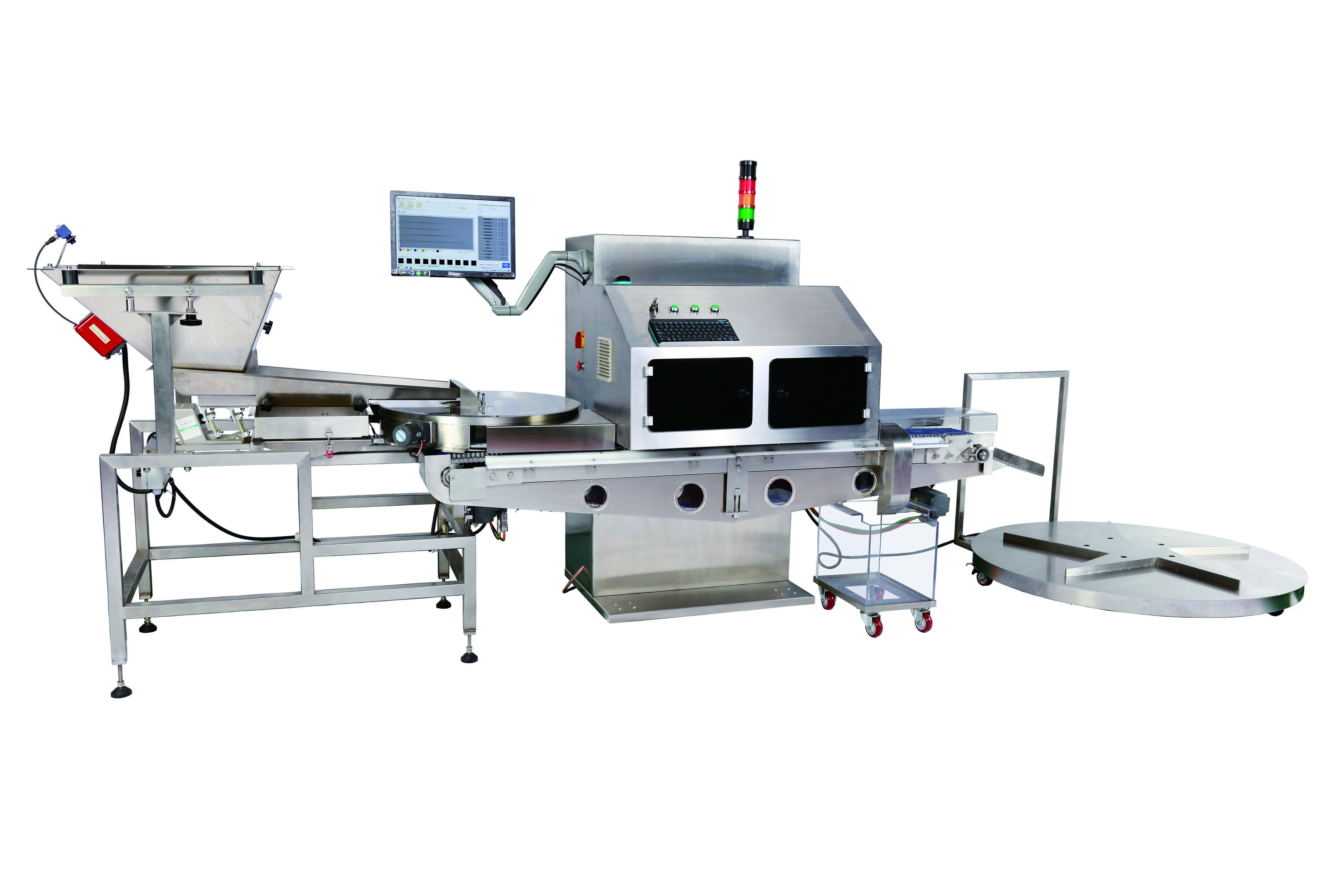
Modern equipment relies on clever physics to remove bad product. The primary mechanism utilizes targeted air-flow separation. This weight-based sorting method uses compressed air jets to evaluate each passing capsule. The system calculates aerodynamic drag and weight in milliseconds. Empty, under-filled, or loose capsule caps weigh significantly less than properly filled ones. The air jet easily blows these lightweight defects into a separate reject chute. Fully filled capsules resist the air current and drop safely into the acceptance bin. You need a reliable capsule sorting machine to perform this separation accurately at high speeds.
Beyond weight differences, capsules also suffer from physical deformities. Diametrical and mechanical sorting tackles these dimensional flaws. The equipment features specialized sizing plates and rotational mechanisms. As capsules move through these calibrated plates, the system filters out structural defects. It mechanically traps deformed, telescoped, or oversized units. Telescoped capsules happen when the cap and body crush together improperly. The sizing plates catch these wider units immediately. They cannot pass through the precision-machined holes, ensuring only perfectly shaped capsules continue downstream.
However, we must apply a skeptical check to these automated mechanics. Air-flow sorting works brilliantly for gross weight discrepancies. Yet, you must calibrate it strictly. If operators set the air pressure too high, they create a new problem. The machine will start rejecting acceptable capsules sitting on the lower end of the allowed weight tolerance. This poor calibration wastes good product. Engineering teams must conduct thorough testing runs to dial in the exact air pressure. They must strike a perfect balance between catching defects and preserving acceptable yield.
Sorting technology profoundly impacts your primary production metrics. Dosing uniformity stands as the most critical metric for any manufacturer. Proper sorting ensures only correctly filled capsules reach the final consumer. It removes empty or half-filled units before packaging. This strict gatekeeping safeguards the therapeutic efficacy of the medication. Patients rely on receiving the exact promised dose. By integrating strict capsule quality control, you guarantee medical consistency and protect patient health.
Aesthetic and physical integrity also dictate consumer trust. Scratched, dented, or powder-coated capsules look terrible. They damage brand perception immediately upon opening the bottle. Consumers often associate poor visual quality with unsafe medication. High-end capsule inspection equipment actively filters out these ugly, compromised units. It catches pinholes, dents, and heavy powder dusting. You deliver a visually perfect product every single time.
Moreover, modern systems provide essential data verifiability. Older manual methods offer zero actionable data. In contrast, automated units generate precise, quantifiable reject counts. QA teams review this data daily. If the machine rejects an unusually high number of empty units, QA spots the trend instantly. They can then trace the issue back to a specific upstream capsule filling machine. This data loop prevents prolonged manufacturing errors.
Quality Metric | Manual Inspection Impact | Automated Sorting Impact |
|---|---|---|
Defect Detection Rate | Highly variable; decreases over shift due to fatigue. | Consistent high accuracy; mechanically guaranteed. |
Data Verifiability | Anecdotal or poorly tracked manually. | Precise digital counts for specific defect types. |
Dosing Uniformity | Prone to missing slightly under-filled capsules. | Strict aerodynamic separation ensures weight accuracy. |
Aesthetic Integrity | Often misses micro-dents or light powder coating. | Physical sizing plates catch structural deformities easily. |
Pharmaceutical manufacturers constantly seek ways to streamline their operations. The industry now heavily favors consolidated workflows. You can easily link polishing and sorting into a single continuous process. In this setup, capsules exit the filler and drop directly into the polisher. After the polisher removes exterior dust, the capsules flow instantly into the sorting unit. This seamless integration eliminates the need for intermediate storage bins. It drastically speeds up the entire batch processing timeline.
Consolidated workflows also deliver significant handling reduction. Minimizing physical transfer between separate machines remains a top priority. Every time operators scoop, dump, or transport capsules, they risk damaging them. Manual transfer causes scratching, denting, and static buildup. By utilizing an integrated system, you remove human handling entirely. Capsules glide smoothly from one automated stage to the next. This gentle handling preserves the structural integrity of your valuable product.
Cleanroom space always commands a premium price. Footprint optimization provides a massive operational advantage. Utilizing integrated 2-in-1 units saves valuable floor space. Instead of housing two separate bulky machines, you install one streamlined system. This compact design gives operators more room to move safely. It also simplifies the cleanroom ventilation mapping. Upgrading to a combined unit makes profound logistical and financial sense for growing facilities.
Choosing the right equipment requires a systematic evaluation framework. You cannot simply buy the cheapest option available. Poor equipment selection leads to severe operational bottlenecks. We recommend following a strict criteria list when assessing any new automatic sorting machine. Focus on capacity, agility, and regulatory compliance.
Throughput Alignment: You must select a machine whose capacity safely exceeds your filler. Look at the Capsules Per Minute (CPM) rating. If your filler produces 100,000 CPM, your sorter must handle at least 120,000 CPM. This buffer prevents massive backups. It ensures the downstream process never chokes the upstream filler.
Changeover Agility: Assess the tooling requirements closely. You will frequently switch between capsule sizes, like Size 00 to Size 4. Tool-less changeovers are a critical success criterion. Operators should swap sizing plates using only their hands. If they need wrenches or screwdrivers, the changeover takes too long. Fast changeovers maximize your daily production uptime.
Compliance and Cleanability: Frame your entire evaluation around strict GMP compliance. You must demand 316L stainless steel for all contact parts. Inspect the machine design for hidden crevices. Minimal blind spots prevent dangerous powder accumulation between batches. Finally, evaluate the teardown process. Operators must easily dismantle the unit for daily washdowns without complex procedures.
Installing new equipment always introduces temporary operational friction. Calibration challenges represent the first major hurdle. Finding the exact "sweet spot" for compressed air pressure requires patience. You must use trial and error during the initial setup phase. Engineers run test batches containing known defects. They tweak the airflow until it ejects all defects without losing good capsules. You must budget adequate time for this critical calibration process before starting commercial runs.
Operator adoption heavily influences your rollout success. New machines intimidate staff accustomed to older manual methods. You must write and enforce strict Standard Operating Procedures (SOPs). Operators need clear instructions for their daily tasks.
Daily Calibration Checks: Operators must verify air pressure gauges before starting any batch.
Jam Clearance Protocols: Staff must know how to safely clear blockages without damaging the sizing plates.
End-of-Shift Cleaning: Teams must follow precise teardown steps to wash and dry all contact parts thoroughly.
Finally, you cannot ignore strict validation requirements. Regulatory bodies demand proof that your machine works as intended. You must execute rigorous Installation Qualification (IQ) protocols first. IQ proves you installed the unit correctly. Next, Operational Qualification (OQ) verifies the machine functions perfectly empty. Lastly, Performance Qualification (PQ) proves it sorts defects accurately under full production loads. Completing these validation steps satisfies demanding regulatory audits and ensures lasting compliance.
Upgrading your inspection process protects your bottom line and your patients. An automated sorting system acts as much more than a simple quality gate. It serves as a powerful OEE multiplier for your downstream packaging lines. By catching telescoped and empty capsules early, you prevent disastrous blister line jams. You also eliminate the staggering costs of raw material waste caused by human sorting errors.
When you begin shortlisting equipment, apply strict procurement logic. Advise your purchasing decision-makers to prioritize vendors offering customized Factory Acceptance Testing (FAT). You should demand the vendor test the machine using your specific capsule formulations and sizes. Do not accept generic testing data. Tool-less changeovers and 316L stainless steel construction remain non-negotiable requirements.
Take immediate action to improve your facility. First, audit your current manual reject rates to understand your baseline losses. Next, consult with your internal equipment engineers. Map out your cleanroom footprint to see where an integrated polishing and sorting unit fits best. Investing in automated sorting secures your product quality and scales your manufacturing safely.
A: Yes, but calibration must be adjusted carefully. Static elimination and air pressure settings require precise tuning. HPMC capsules often possess different weight metrics and static properties compared to standard gelatin. Operators must re-calibrate the airflow when switching shell materials to maintain accurate defect sorting.
A: Mechanical sorters use air and physical sizing plates to rapidly separate defects based on weight and dimension. Visual inspection relies on cameras and AI to detect micro-flaws like color variations or print errors. Visual systems cost more and require highly complex validation procedures.
A: On modern GMP-compliant equipment featuring tool-less designs, operators complete size changeovers very rapidly. A well-trained team can swap plates and perform basic cleaning in 15 to 30 minutes. This speed minimizes downtime and keeps production schedules on track.
A: When properly calibrated, it causes no damage. Sorters utilize controlled airflow and smooth rotary paths. However, severely worn contact parts or excessive speed settings can cause exterior scratching. This highlights the absolute necessity of strict preventative maintenance and daily machine inspections.


