
- All
- Product Name
- Product Keyword
- Product Model
- Product Summary
- Product Description
- Multi Field Search
 English

Views: 126 Author: Site Editor Publish Time: 2026-09-16 Origin: Site


Moving from standard lines to a high speed softgel machine is rarely just about increasing RPM. It requires managing thermal dynamics, fluid precision, and compliance at massive scale. Production managers and facility engineers know this challenge intimately. You face significant capital expenditures when scaling operations. Mitigating yield loss during high-volume runs becomes critical for profitability. Scaling up pharmaceutical production demands much more than a fast motor. Evaluating an equipment upgrade requires looking far past theoretical maximum speeds. We must focus deeply on the mechanical and software features ensuring sustained, repeatable output. Throughout this article, we explore exactly what makes modern equipment truly efficient. You will learn how precision pumps, automated chilling, and compliance-ready software separate average equipment from elite systems. We will also cover facility readiness and the importance of operational efficiency.
High-speed output relies on advanced servo-driven systems and precision medicine pumps, not just faster rotation.
True yield efficiency at high speeds requires integrated, automated chilling and micro-lubrication systems.
Compliance-ready software (e.g., FDA 21 CFR Part 11) is non-negotiable for enterprise-scale automatic encapsulators.
Evaluating a machine requires assessing facility readiness (HVAC, footprint) and realistic changeover times alongside theoretical output.
We define high-speed operation by specific modern thresholds. Modern equipment often exceeds 100,000 capsules per hour. This baseline varies heavily based on die size and fill material viscosity. Standard operations usually cap out around 40,000 to 60,000 capsules hourly. Doubling this output requires entirely different engineering principles. Upgrading becomes justified under specific operational conditions. You might face persistent order backlogs. High labor costs per batch can compress your margins. Expanding into high-volume nutraceutical or pharmaceutical contracts demands greater capacity.
Many engineers approach high-speed claims skeptically. A faster machine producing frequent downtime yields less than a reliable standard machine. High reject rates quickly destroy any speed advantage. We must prioritize sustained effective throughput over theoretical peak speeds. Pushing a standard machine beyond its limits causes excessive mechanical wear. It also compromises capsule seal integrity. Sustained effective throughput measures actual sellable product at the end of a shift. This metric accounts for changeovers, jams, and cleaning cycles. Facilities justify the upgrade only when the equipment guarantees high uptime alongside rapid production.
Common Mistakes in High-Speed Scaling:
Assuming standard gelatin formulations will behave identically at higher casting speeds.
Ignoring the increased strain on downstream sorting and drying equipment.
Failing to account for the longer cleaning times associated with complex high-speed pumps.
Independent servo motors completely outperform traditional mechanical gear drives. Older machines rely on interconnected mechanical gears. These gears experience backlash and wear down steadily. Servo motors drive the die roll and medicine pump independently. This electronic gearing eliminates physical wear across a central drive train. Operators can make micro-adjustments on the fly. You can sync the timing perfectly via touchscreen. These quick electronic changes improve seam thickness consistency dramatically. Precision synchronization stops capsules from leaking under pressure.
Precision medicine pumps represent the heart of high-speed encapsulation. Fast cycle times demand high-tolerance plungers. Operators need +/- 1% fill accuracy consistently. High velocities amplify tiny dispensing errors. Wasting expensive active pharmaceutical ingredients (API) destroys profitability rapidly. High-speed pumps utilize advanced alloys and tighter clearance tolerances. They maintain uniform pressure even when handling heavy suspensions. This mechanical rigidity prevents dosing drift during long production runs.
Advanced chilling systems keep continuous casting stable. High-speed operation generates immense friction and heat. Gelatin ribbons need rapid cooling before encapsulation. Superior chilling prevents the ribbon from stretching unevenly. Systems utilize chilled water circulation and massive cooling drums. The gelatin freezes instantly into a durable ribbon. This thermal control prevents tearing or premature melting when the material enters the rotary die machine. Without aggressive chilling, high speeds simply produce sticky, unusable ribbons.
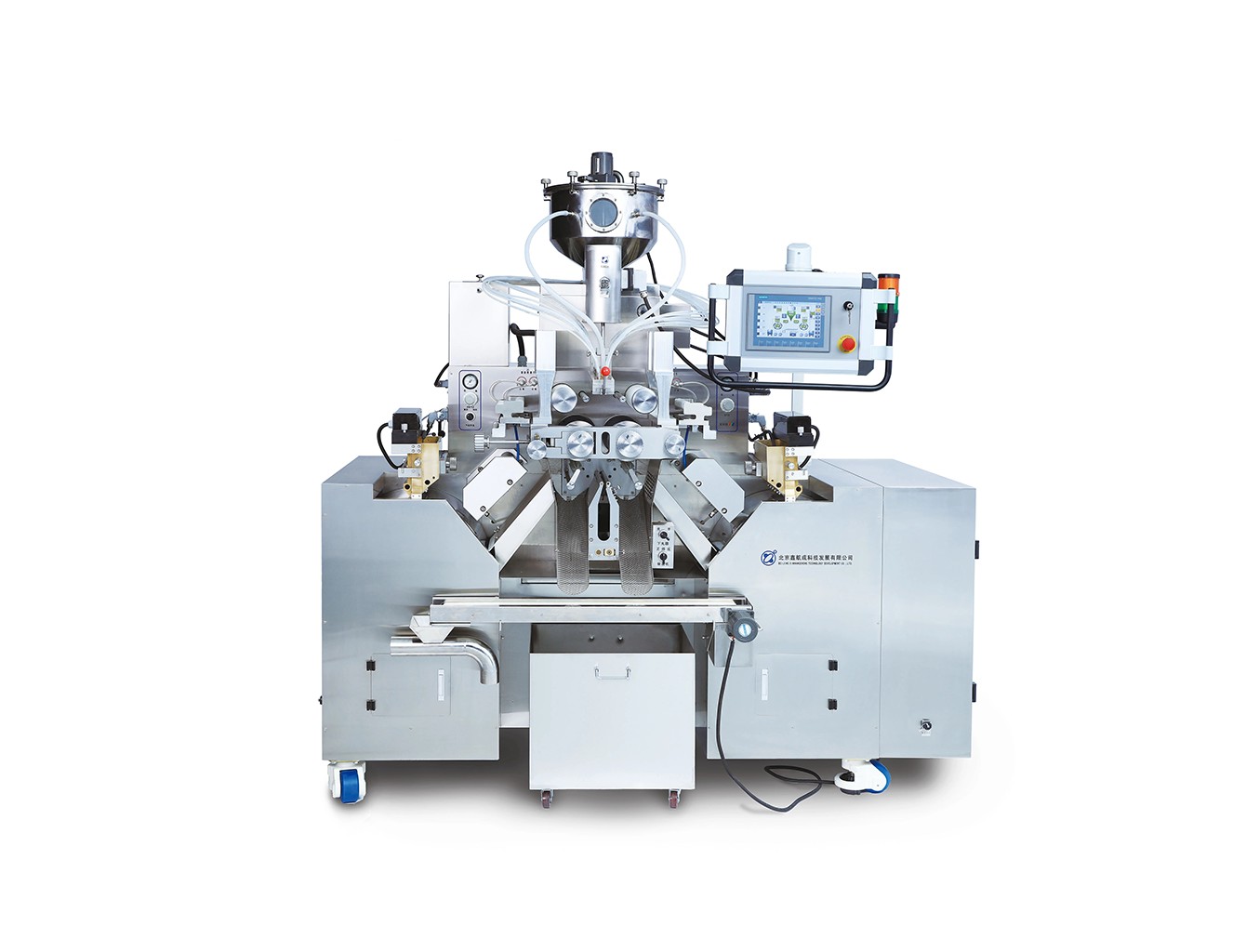
The modern automatic encapsulator relies heavily on sophisticated control software. Human-Machine Interface (HMI) and Programmable Logic Controller (PLC) integration transforms daily operations. Operators no longer rely on manual tuning and guesswork. They load pre-configured recipes directly from touchscreens. The PLC automatically adjusts pump timing, die roll pressure, and temperatures. Saving exact batch parameters reduces operator error during setup. This digital precision drastically shortens setup time.
Micro-lubrication systems resolve a major high-speed bottleneck. Capsules stick together easily at rapid exit velocities. Traditional machines soak the gelatin ribbon in excess mineral oil. This prevents sticking but creates severe downstream cleaning issues. Automated micro-lubrication applies oil in exact microgram quantities. Precision spray nozzles coat the ribbon perfectly. You prevent capsule sticking entirely. Furthermore, you avoid leaving excess residue requiring aggressive downstream solvent washing. Clean capsules move faster through the drying process.
Data integrity dictates software design in modern facilities. We must frame software through the lens of strict regulatory standards. The system must support comprehensive audit trails natively. FDA 21 CFR Part 11 and EU Annex 11 compliance remains non-negotiable. Software must track every parameter adjustment dynamically. It assigns changes to specific user access levels. Electronic signatures lock critical batch records securely. Quality assurance teams rely on this unalterable data during audits. Untrackable manual overrides are unacceptable in modern enterprise environments.
A high speed capsule machine only remains profitable if reject rates stay low. Yield always supersedes raw speed. Pushing equipment past its stable limit increases leaky capsules. Reject rates must remain below the industry baseline of 2-3%. Precision features directly reduce API and gelatin waste. The financial return emerges from maximizing sellable product per hour. You justify the investment by converting raw materials into viable inventory flawlessly.
Performance Metric | Standard Equipment | High-Speed Equipment |
|---|---|---|
Average Output (Capsules/Hr) | 40,000 - 60,000 | 100,000 - 150,000+ |
Fill Accuracy Tolerance | +/- 2% to 3% | +/- 1% (Servo-driven) |
Changeover Time | 4 - 8 Hours | 1 - 3 Hours (Tool-less) |
Gelatin Ribbon Cooling | Ambient / Basic Air | Integrated Chilled Water Drums |
Changeover and Clean-in-Place (CIP) mechanics dictate daily profitability. Faster running speeds mean nothing if changeovers take eight hours. Look for tool-less die removal systems. Engineers should swap rotary dies using quick-release mechanisms. Accessible pump designs speed up deep cleaning. A machine resuming production quickly generates revenue faster. Slow cleaning protocols negate the throughput gains entirely.
Downstream synchronization remains a critical upgrade factor. High-speed encapsulation requires equally fast supporting equipment. Tumble dryers must handle double the hourly volume. Inline inspection systems need faster cameras. Sorting equipment must keep pace without jamming. You are implementing a complete system upgrade. Replacing the encapsulator alone creates severe bottlenecks in the drying room.
Facility environments directly impact encapsulation success. High-speed gelatin processing generates significant ambient heat. Friction from moving parts warms the surrounding air quickly. Facilities require strict ambient temperature and humidity controls. Production rooms typically demand 20-22°C temperatures. Relative humidity must stay between 35% and 40%. Exceeding these environmental limits causes gelatin ribbons to melt prematurely. Upgrading your HVAC system often costs as much as the encapsulator itself.
Utility Type | Requirement Profile | Operational Impact |
|---|---|---|
Electrical Supply | High-voltage, stable 3-phase power | Powers independent servos and intense heating elements. |
Chilled Water Loop | Continuous flow, precise temperature | Prevents cooling drums from overheating during rapid casting. |
Compressed Air | Dry, oil-free, high pressure | Drives pneumatic components and automated lubrication sprays. |
The increased utility load requires careful facility planning. High-speed equipment draws massive electrical currents. Heating the gelatin melting tanks quickly demands substantial power. Your facility must supply a robust chilled water loop. Compressed air lines must remain perfectly dry and oil-free. Moisture in the air lines ruins pneumatic valves rapidly. Facility engineers must audit existing utilities before signing purchase orders.
Operator competency shifts dramatically during an upgrade. High-speed systems require operators to transition mentally. They move from being manual mechanics to systems technicians. Turning wrenches becomes less important than understanding PLC alerts. Technicians must interpret software diagnostics accurately. Comprehensive vendor training bridges this knowledge gap. Do not let untrained operators run advanced servo equipment. They will cause catastrophic mechanical crashes.
Validating vendor claims requires rigorous physical testing. Factory Acceptance Testing (FAT) protects your investment. Never accept FAT runs using standard mineral oil. Mineral oil encapsulates easily at high speeds. It proves nothing about real-world capability. Demand testing using your specific complex formulations. Bring sticky suspensions or high-viscosity pastes. Force the vendor to prove the machine handles difficult materials cleanly.
Tooling and parts availability determine your long-term agility. Custom rotary dies wear out eventually. Assess the vendor's lead time for replacements. Can they manufacture a custom die in two weeks, or does it take three months? Critical spares must sit in local warehouses. Waiting weeks for a proprietary servo motor stalls production completely. Ensure the vendor guarantees rapid part delivery.
Actionable Next Steps for Your Team:
Assemble a cross-functional evaluation team including Engineering, QA, and Procurement.
Audit your current HVAC and utility capacities against high-speed specifications.
Compile a list of your three most difficult fill materials for the vendor FAT.
Request detailed technical proposals emphasizing changeover times and software compliance.
Evaluate the vendor's post-installation training programs for systems technicians.
Proper team alignment prevents expensive implementation mistakes. Quality Assurance must verify FDA software compliance early. Engineering must confirm utility connections fit the footprint. Procurement negotiates the final service agreements. Moving systematically guarantees a smooth installation process.
Investing in a high speed softgel machine represents a systemic facility upgrade. It demands precision engineering, robust automation, and strict compliance capabilities. We have seen how independent servo motors and precision pumps replace outdated mechanical gears. Rapid chilling and micro-lubrication prevent gelatin failures at high velocities. Moreover, integrated software guarantees the data integrity required by global regulators.
The best equipment always balances theoretical speed with predictable uptime. Low changeover friction ensures you spend more hours producing sellable inventory. Verifiable data integrity protects your facility during compliance audits. Focus on the realities of sustained throughput rather than maximum dial speeds.
Take action on your facility upgrade today. Review comprehensive technical specification sheets from verified manufacturers. Download a thorough buyer’s checklist to audit your facility readiness. Schedule a detailed technical consultation with an engineering representative to discuss your specific formulation challenges.
A: A high-speed rotary die machine typically produces between 100,000 and 150,000 capsules per hour. This estimate assumes standard #20 Oblong or #10 Oval sizes. However, fill material viscosity directly dictates actual speed. Highly viscous pastes force slower pump cycles. Lighter oils allow maximum operational RPM. Always base your production estimates on your specific formulation.
A: You do not necessarily need specialized formulations. These systems handle standard bloom gelatin efficiently. However, you must tightly control viscosity and temperature profiles. High-speed casting demands rapid cooling. Inconsistent gelatin mixtures will tear or melt at accelerated speeds. Precision thermal control in your melting tanks is mandatory.
A: Modern equipment uses specialized mixing hoppers. Continuous agitation prevents active ingredients from separating before injection. High-tolerance medicine pumps maintain uniform pressure. This ensures dense suspensions flow smoothly into the die cavities. Proper inline heating also keeps sticky suspensions viscous enough for rapid injection without clogging the plunger pathways.
A: Daily maintenance involves extensive cleaning and visual inspections. Technicians must clear all residue from the spreader boxes. Weekly intervals require strict lubrication checks across all moving joints. You must inspect medicine pump seals regularly. Annual preventative maintenance involves completely dismantling critical drive components. Manufacturers recommend replacing heavy-wear servo parts during this annual cycle.


