
- All
- Product Name
- Product Keyword
- Product Model
- Product Summary
- Product Description
- Multi Field Search
 English
Views: 0 Author: Site Editor Publish Time: 2026-10-03 Origin: Site


Procuring the optimal encapsulation line is a critical exercise in operational risk mitigation. You face high gelatin waste, frequent tooling changeovers, and painful compliance bottlenecks if you deploy the wrong system. Modern capsule technology is moving rapidly beyond standard animal gelatin. Manufacturers now process high-viscosity pastes, heavy suspensions, and plant-based vegan polymers on a daily basis. These complex formulations demand highly adaptable thermal controls and precision pumping capabilities. This guide provides a strategic framework to help you evaluate your equipment options thoroughly. You will learn how to assess machinery based on overall operational efficiency, strict regulatory compliance, and seamless facility integration. We will explore key technical specifications, essential automation requirements, and the validation standards you need to ensure highly qualified procurement decisions. Ultimately, matching specific product complexities to the right hardware guarantees long-term manufacturing success.
Match machine capacity directly to your batch sizes—oversizing leads to excessive gelatin degradation and energy waste during low-volume runs.
Evaluate drive systems and die roll precision; micro-adjustments in ribbon thickness dictate yield rates and seam integrity.
Require comprehensive IQ/OQ/PQ documentation from the manufacturer as a non-negotiable baseline for GMP manufacturing.
Factor in ancillary system compatibility (gelatin melting tanks, tumble dryers) when assessing total footprint and line integration.
Scaling pharmaceutical operations requires precise mapping of facility capabilities to machine output. Managers often make the critical mistake of evaluating theoretical maximum speeds rather than realistic, sustainable operational parameters. To prevent this, you must establish strict operational baselines before contacting any equipment vendors.
Define your success criteria carefully using these three primary metrics:
Output per Hour (OPH): Calculate realistic production rates by factoring in mandatory cleaning cycles and routine maintenance stops.
Target Yield Percentages: Identify acceptable raw material loss thresholds based on the financial value of your active pharmaceutical ingredient (API).
Changeover Times: Document the maximum allowable hours required to transition the line between completely different product formulations.
Next, align your machinery choice with your specific production scale. Lab and pilot-scale machines utilize smaller die rolls, typically measuring between two to four inches. They allow rapid tooling changeovers and consume significantly less API during setup phases. This inherent efficiency makes them ideal for early-stage clinical trials. High-volume commercial production demands continuous, uninterrupted operation. Commercial models rely on massive 8 to 10-inch die rolls. They integrate automated gelatin feed systems and utilize dual tumble-drying integration to handle massive daily yields. Oversizing your commercial machine for small batches causes excessive gelatin degradation and severe energy waste.
Formulation constraints also dictate hardware requirements. Standard oil fills flow easily through traditional pumping systems. Conversely, viscous suspensions demand heavy-duty positive displacement pumps. These specialized pumps push dense materials through the injection wedge without clogging or cavitating. Furthermore, plant-based vegan formulations require significantly higher melting temperatures. Traditional animal gelatin melts smoothly around 60°C. Tapioca and starch-based alternatives often demand temperatures exceeding 90°C. You must equip your facility with specialized ribbon casting boxes designed specifically to manage these elevated thermal profiles.
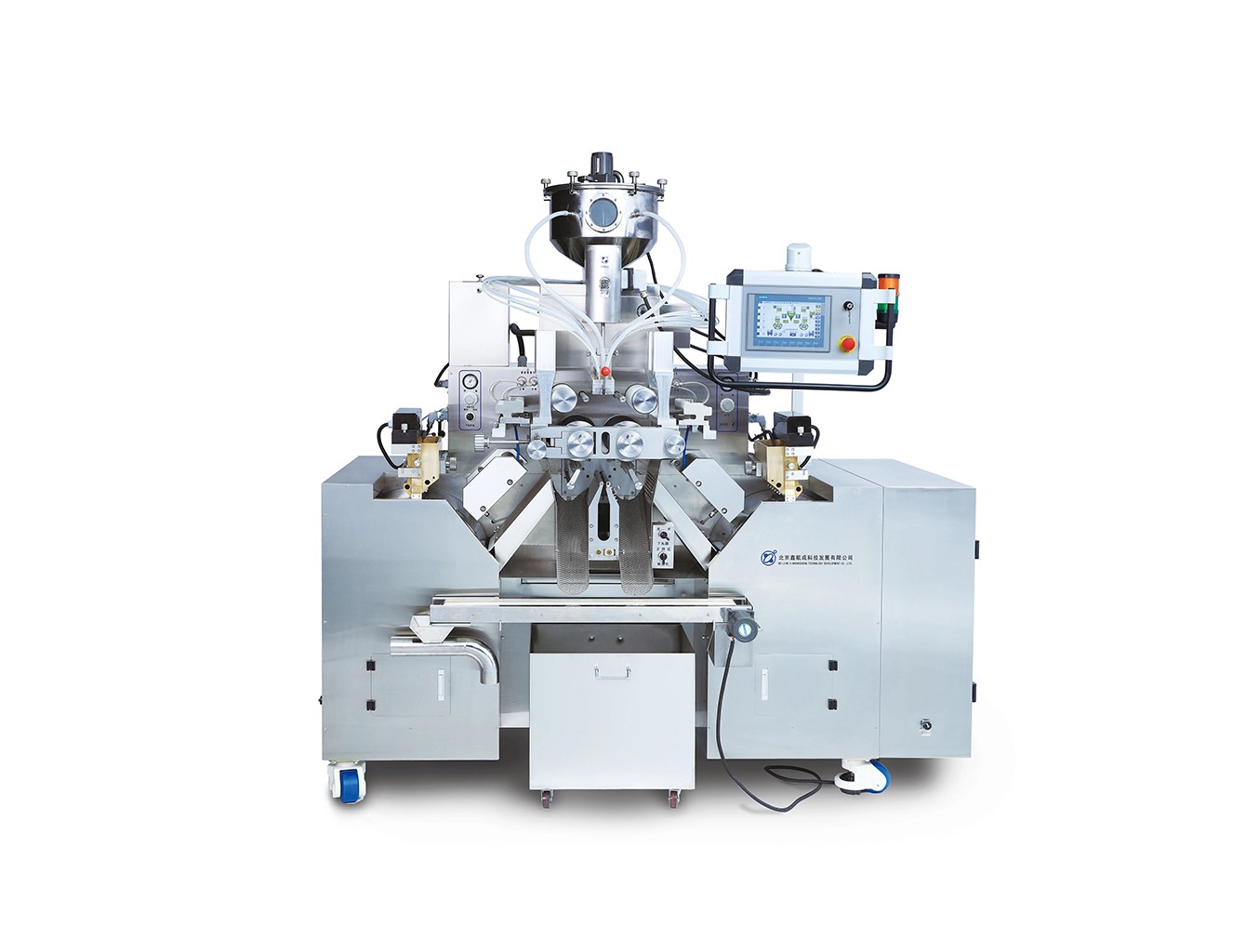
The mechanical architecture of your soft capsule machine dictates the final quality, seam integrity, and yield of every single batch. You must evaluate several core technical specifications to ensure consistent production.
Die roll precision and alignment represent the most critical mechanical factors. Traditional gearboxes experience inevitable mechanical wear, causing timing drifts during long production runs. Independent servo-motor drives offer unmatched precision. They allow operators to make micro-adjustments to die roll timing on the fly. You do not have to halt production to align the injection wedge. This drastically reduces downtime and prevents material waste. Additionally, you must evaluate the cooling drum technology. Consistent drum temperatures prevent ribbon thickness variations. Uneven gelatin ribbons cause capsule leaking, weak seams, and massive rejection rates.
Feature | Traditional Mechanical Drive | Advanced Servo-Motor Drive |
|---|---|---|
Timing Adjustments | Requires machine stoppage and manual gear alignment. | Allows on-the-fly micro-adjustments via HMI. |
Wear and Tear | High friction leads to gear degradation over time. | Contactless synchronization reduces long-term wear. |
Production Uptime | Lower due to frequent manual interventions. | Significantly higher operational availability. |
Ribbon Consistency | Vulnerable to mechanical drift and vibration. | Highly stable, ensuring uniform capsule seams. |
Medicine pump accuracy heavily impacts regulatory compliance. You must verify the tolerance of the plunger block mechanism. Regulators demand strict dosing consistency. Tighter tolerances—specifically a ±1% variation—are strictly critical for accurate API dosing. Missing this mark results in rejected batches, wasted API, and intense regulatory scrutiny.
Drying infrastructure often becomes the hidden bottleneck in encapsulation facilities. A high-speed encapsulation unit is completely useless if your downstream drying line fails to keep pace. Evaluate the automated transfer mechanism moving capsules from the main encapsulator into the inline tumble dryers. Verify the total airflow volume and check the humidity control parameters. Evaluate the physical cleanability of the drying baskets to prevent cross-contamination between different SKUs.
Strict compliance frameworks form the non-negotiable backbone of GMP manufacturing. You must thoroughly vet every equipment vendor's ability to support regulatory mandates.
Material traceability remains a top priority during facility audits. Regulators demand strict proof of material safety for all product-contact surfaces. Verify the manufacturer uses high-grade 316L stainless steel for every component touching the API or gelatin mass. You must also confirm they utilize FDA-approved, food-grade materials for internal seals, gaskets, and lubrication systems. Always ask for certified material test reports during the procurement phase to avoid compliance failures later.
Data integrity protocols ensure secure, auditable production records. Assess the Programmable Logic Controller (PLC) and Human-Machine Interface (HMI) comprehensively. To meet CFR 21 Part 11 requirements, the interface must support hierarchical user access levels. It needs secure, unalterable audit trails logging every operator action. It requires encrypted batch reporting capabilities. Modern interfaces also offer robust recipe management features. They allow operators to save specific thermal parameters, pump timings, and drying settings for distinct SKUs. This automation eliminates manual data entry errors and guarantees batch-to-batch consistency.
Validation support heavily influences how quickly you can launch commercial production. Factory documentation serves as a critical baseline. The vendor must provide comprehensive Installation Qualification (IQ), Operational Qualification (OQ), and Performance Qualification (PQ) protocols. Review their available frameworks for Factory Acceptance Testing (FAT) and Site Acceptance Testing (SAT). Thorough, well-documented validation protocols prevent costly regulatory delays during final facility inspections.
Procuring reliable pharmaceutical production equipment involves mapping long-term operational sustainability and facility integration. You must look beyond initial specifications to understand daily operational workflows.
Evaluate continuous resource consumption carefully. Constant heating and cooling cycles demand immense energy loads. Scrutinize the consumption rate of specialized lubrication oil. Traditional machines over-lubricate the exterior gelatin ribbon, requiring intensive, labor-heavy downstream cleaning processes. Advanced micro-lubrication systems apply exact, minimal oil volumes. They significantly reduce resource consumption and drastically shorten cleaning validation times between batches.
Maintenance accessibility directly impacts annual uptime. Can your internal maintenance team easily reach the injection wedge? Are the gelatin spreader boxes simple to dismantle and sanitize? Assess the standard lead time for ordering custom die rolls. Introducing new capsule shapes requires specialized, high-precision tooling. Extensive delays in die roll manufacturing stall your entire product launch pipeline. Ensure the vendor guarantees rapid tooling delivery to support agile production schedules.
Line integration poses a significant engineering challenge. You rarely operate a standalone machine; you manage a continuous network. Ensure seamless mechanical and digital communication between the gelatin melter, the main encapsulator, and the tumble dryer network. Mixed-vendor lines often suffer from severe communication protocol mismatches. Verify PLC compatibility across all ancillary systems to maintain steady production rhythms and prevent bottleneck pileups.
Selecting a manufacturing partner requires intense due diligence. Do not rely solely on polished marketing brochures. Verify their historical implementation success specifically within heavily regulated pharmaceutical environments. Nutraceutical manufacturing experience does not automatically translate to strict pharmaceutical capability.
Assess their global infrastructure. Demand guaranteed response times for technical support and verify their regional spare parts inventory. Extended mechanical downtime destroys production schedules and jeopardizes sensitive API stock.
Initiate the procurement process using a highly detailed User Requirement Specification (URS) document. Your URS must detail your exact API behaviors, suspension viscosity ranges, and internal facility environmental controls. Request empirical data from the vendor responding to your RFP.
Avoid these common mistakes during vendor selection:
Ignoring local support availability for immediate troubleshooting.
Failing to test complex, high-viscosity suspension fills during the FAT phase.
Overlooking the physical footprint limitations and ceiling height constraints of your cleanroom.
Accepting generic validation documents instead of custom-tailored IQ/OQ/PQ protocols.
Ask vendors for proven waste percentages and Overall Equipment Effectiveness (OEE) metrics gathered from similar real-world installations. Data-driven comparisons reveal the true operational reliability of competing machine platforms.
Selecting softgel equipment is not about buying the fastest machine, but the most predictable one. You must prioritize modularity, stringent dosing accuracy, and robust validation documentation to ensure long-term success. Focus heavily on servo-driven precision, CFR 21 Part 11 compliant automation, and seamless line integration. Next Step: Draft a comprehensive User Requirement Specification (URS) that defines your exact formulation behaviors and facility constraints before requesting any vendor quotes. This proactive approach guarantees you procure a system capable of meeting both current operational demands and future regulatory challenges.
A: Lead times generally range from 3 to 6 months depending on customization, with an additional 2 to 4 weeks for SAT and operator training.
A: Usually, but with caveats. Vegan films require higher processing temperatures and different cooling parameters. Machines must be specifically equipped with advanced thermal controls and upgraded casting boxes to handle both.
A: Improper gelatin ribbon thickness and temperature fluctuations, usually caused by inconsistent cooling drums or operator error during manual adjustments. Servo-driven machines mitigate this risk.
A: Yes, reputable pharmaceutical production equipment vendors offer custom tooling design, but buyers should confirm the lead time for replacement dies, as tooling wear is inevitable.


