
- All
- Product Name
- Product Keyword
- Product Model
- Product Summary
- Product Description
- Multi Field Search
 English
Views: 152 Author: Site Editor Publish Time: 2026-09-05 Origin: Site


The drying phase remains the most common bottleneck in softgel manufacturing. It represents the highest risk point for critical quality attributes. Unpredictable variables during this stage can ruin entire production batches. You must manage this phase perfectly to maintain product viability.
Immediately post-encapsulation, softgels contain excess moisture. Typically, the gelatin shell holds 30% to 40% water. You must precisely reduce this moisture to a target range of 6% to 8%. Operators must extract this water carefully to avoid damaging the fragile capsule walls. Any deviation compromises structural integrity.
This article evaluates how commercial drying infrastructure directly impacts yield. We explore how modern systems prevent common manufacturing defects. We also guide production managers on evaluating system upgrades. You will learn how to transition this phase into a highly controlled, predictable operation.
Precise moisture control during the drying phase prevents costly batch rejections caused by deformation, leaking, or sticking.
The choice between a traditional rotary cage dryer setup and a continuous in-line system depends entirely on your facility's footprint, batch variability, and throughput goals.
Evaluating a softgel drying system requires looking beyond the machine to how it integrates with your facility's existing HVAC and dehumidification infrastructure.
Upgrading the capsule drying process directly improves operational ROI by reducing drying time, minimizing manual handling, and ensuring strict GMP compliance.
Inadequate drying infrastructure quietly drains facility profitability. Operators often overlook the true financial impact of an inefficient drying line. When you rely on outdated moisture extraction methods, you risk substantial yield losses. Every rejected batch wastes expensive active pharmaceutical ingredients (APIs). It also consumes valuable operator hours. Establishing strict moisture control safeguards your bottom line and ensures consistent product quality.
Drying failures manifest as visible physical defects. These issues frequently trigger QA rejections. Understanding these defects helps you troubleshoot your production line effectively.
Sticking and Clumping: This occurs due to insufficient initial surface drying. During the tumble drying phase, capsules remain too tacky. They bond together. Once clumped, they become impossible to separate without tearing the shells.
Brittleness vs. Leaking: Extreme moisture variations destroy capsule integrity. Over-drying creates brittle shells. It also triggers cross-linking issues. Cross-linking renders the gelatin insoluble, ruining the product. Conversely, under-drying leaves the shell weak. Weak shells leak during packaging and suffer from a severely reduced shelf life.
Deformation (Dimpling): Softgels lose their uniform shape when exposed to uneven heat. Improper rotational speeds inside the dryer also cause dimples. These aesthetic flaws often lead to consumer rejection.
The chart below summarizes these common defects, root causes, and operational impacts.
Defect Type | Primary Root Cause | Operational Impact |
|---|---|---|
Sticking / Clumping | Inadequate initial surface drying | Total batch loss; impossible to salvage |
Brittleness | Over-drying; excessive heat exposure | Cross-linking; failed dissolution tests |
Leaking | Under-drying; retained moisture | Packaging contamination; shortened shelf life |
Deformation | Uneven airflow; poor rotation speed | Aesthetic rejection; packaging machine jams |
Slow drying dictates the pace of your entire facility. An inefficient drying room creates a massive bottleneck. Encapsulation machines might run at high speeds, but they must pause if the drying room reaches capacity. This delay limits overall facility throughput. It escalates labor costs because workers spend excessive time handling trays. Expanding your encapsulation capacity yields no benefits if your drying infrastructure cannot keep up.
Modern equipment transforms a precarious art into a predictable science. A highly engineered softgel drying system manages the delicate balance of heat, airflow, and time. It systematically extracts water without degrading sensitive ingredients.
The moment capsules exit the die rolls, they are extremely fragile. They require immediate surface drying. The tumble dryer plays a crucial role here. It sets the capsule shape rapidly. Baskets rotate at precise speeds to keep the softgels moving. This constant motion prevents initial adhesion. The capsules shed their surface tackiness within the first hour. This phase prepares them for deeper moisture extraction.
Surface drying only solves half the problem. The shell matrix still holds tightly bound moisture. Deep extraction requires engineered airflow. Systems inject controlled low-humidity air directly over the capsules. This dry air creates a moisture gradient. It pulls bound water from the gelatin or vegan shell matrix into the surrounding environment.
Temperature control is equally critical. You must avoid degrading active pharmaceutical ingredients (APIs). High heat ruins temperature-sensitive fill materials like fish oils or probiotics. Modern systems maintain cool temperatures while relying on low relative humidity (RH) to drive the drying process.
Legacy systems relied heavily on manual monitoring. Operators constantly checked humidity gauges and adjusted valves manually. Modern automation removes this operator guesswork entirely. Programmable Logic Controllers (PLCs) track humidity and temperature in real-time. Sensors provide continuous feedback loops. The system adjusts airflow instantly to maintain optimal parameters. This data-driven approach guarantees batch-to-batch consistency.
Best Practices for Process Control: Always calibrate your RH sensors quarterly. Drift in sensor readings can ruin a batch before alarms trigger. Rely on digital logging to satisfy regulatory compliance.
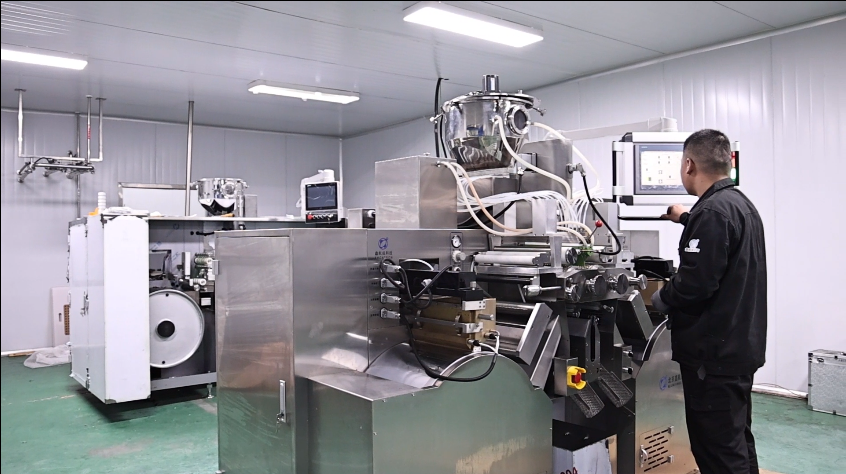
Selecting the right architecture dictates your operational flow. Buyers must compare the two dominant approaches to the capsule drying process. Your choice impacts footprint, labor needs, and scale.
Feature | Traditional Tumble & Tunnel | Continuous In-Line |
|---|---|---|
Process Flow | Batch-based; requires tray transfer | Automated; capsules move through baskets |
Footprint | Requires large dedicated drying rooms | Requires longer linear floor space |
Labor Requirement | High (manual tray handling) | Low (fully automated) |
Flexibility | Excellent for varied batch sizes | Better suited for long, single-product runs |
The traditional method separates the process into two distinct stages. First, capsules undergo an initial dry in a rotary cage dryer. After a few hours, operators transfer them. Workers spread the capsules onto shallow, paper-lined trays. They stack these trays on carts and push them into a dedicated drying room or tunnel.
This method excels in certain environments. It fits facilities handling a high product mix. If you face frequent changeovers, tray drying offers flexibility. Specific complex formulations also benefit here. Specialized nutraceuticals sometimes require extended curing times spanning several days. Tray rooms accommodate these slow-curing recipes perfectly.
In-line systems automate the entire extraction journey. Capsules move automatically through multiple connected tumble drying baskets. Blowers push conditioned air through each basket segment. The capsules advance sequentially until they reach the final moisture target. They exit the machine ready for inspection and packaging.
These systems are ideal for high-volume operations. Single-product continuous runs see massive ROI from in-line setups. They eliminate the manual labor of tray handling. However, they introduce distinct trade-offs. An in-line machine requires a significantly larger linear footprint. It also proves less flexible for highly varied batch sizes. Cleaning a massive in-line system between different product runs takes more time.
Purchasing new equipment demands a structured evaluation framework. You must look beyond basic specifications. Consider how the new softgel dryer integrates into your broader manufacturing ecosystem.
Airflow Engineering & Dehumidification Integration: The machine cannot work in isolation. It must sync flawlessly with your facility's desiccant dehumidifiers. Request airflow mapping from the OEM. You need proof of uniform air distribution across all basket zones. Dead zones cause uneven drying and dimpling.
Cleanability and GMP Compliance: Cross-contamination ruins pharmaceutical credibility. Look for fully welded stainless steel construction. Avoid designs harboring hidden crevices. Tool-less basket removal is a mandatory feature. Easily accessible catch pans allow operators to clean spills quickly. These features drastically reduce your Clean-in-Place (CIP) turnaround time.
Energy Efficiency: Extracting moisture consumes immense power. Evaluate the insulation quality around the blower units. Assess the air recirculation capabilities. Systems capturing and reusing conditioned air lower long-term utility costs. Energy efficiency directly influences your operational margins over a ten-year lifespan.
Material Compatibility: The industry is shifting. You must assess the system's ability to handle standard animal-based gelatin alongside newer plant-based shells. Materials like HPMC or tapioca require distinct thermodynamic profiles. Vegan shells crack easily under rapid moisture extraction. Your equipment must offer programmable fan speeds to accommodate these delicate formulations.
Upgrading a drying line involves hidden hurdles. Equipment manufacturers often promise seamless integration. Reality tells a different story. You must prepare for specific technical challenges to avoid prolonged downtime.
Your new machine relies heavily on ambient conditions. A high-end unit will fail if the facility's cleanroom HVAC cannot perform. The ambient system must supply the required chilled, low-humidity air consistently. Before ordering equipment, audit your central dehumidifiers. Ensure they possess enough capacity to feed the new line during peak summer humidity spikes.
Plug-and-play expectations are completely unrealistic. Every formulation behaves differently. Gelatin bloom strength dictates water retention rates. Plasticizer ratios—such as glycerin to sorbitol—alter the shell's permeability. Fill types also matter. Oil-based fills transfer heat differently than paste-based suspensions. These variables necessitate custom drying recipes. You will spend weeks tweaking airflow and temperature parameters during your initial rollout.
Common Mistakes to Avoid: Do not use standard gelatin parameters for vegan shells. Do not skip calibrating the airflow when switching from a heavy paste fill to a light oil fill. Ignoring these variables guarantees a spike in defect rates.
Rigorous testing prevents post-installation nightmares. Emphasize the importance of Factory Acceptance Testing (FAT). Test the equipment at the manufacturer's site before shipping. Follow up with comprehensive Site Acceptance Testing (SAT) after installation.
Specifically verify moisture uniformity. Place moisture loggers across different cage zones. Run placebo batches. Prove the machine dries capsules uniformly regardless of their position in the basket. Skipping this validation step leaves you vulnerable to hidden dead zones.
The right drying system transitions your process from an unpredictable art into a highly controlled, data-driven science.
Audit your current defect rates immediately to identify yield losses directly tied to moisture problems.
Measure your drying room energy usage to uncover hidden utility waste.
Consult with specialized equipment engineers to map a tailored solution fitting your specific footprint and product mix.
A: Standard baseline ranges typically sit between 20–24°C and 15–20% relative humidity. However, optimal parameters depend entirely on your specific shell formulation and fill material. Heavy paste fills or plant-based shells often require unique adjustments to prevent cracking or dimpling.
A: Timelines vary drastically by method. Continuous in-line systems can finish the extraction in just a few hours. Traditional tray drying inside dedicated tunnels usually takes anywhere from 24 to over 72 hours, depending heavily on the complexity of the formulation.
A: Yes. However, it requires advanced programmable logic controllers (PLCs). The PLCs must store different recipes. Vegan shells generally require stricter, slower moisture extraction parameters to prevent severe cracking and structural failure during the process.
A: You must maintain correct rotational speeds to keep them moving constantly. Using anti-static materials and proper basket design also helps. Most importantly, ensure adequate pre-drying immediately as they exit the encapsulation machine to remove initial surface tackiness.


