
- All
- Product Name
- Product Keyword
- Product Model
- Product Summary
- Product Description
- Multi Field Search
 English

Views: 0 Author: Site Editor Publish Time: 2026-10-28 Origin: Site


Fish oil oxidizes rapidly upon air exposure. It leaves behind a sticky, stubborn residue that clings tenaciously to stainless steel surfaces. Plant operators often face the nightmare of poor cleaning. This inevitably causes cross-contamination, foul odors, and failed compliance audits. Switching from a pungent marine lipid to a delicate botanical extract requires absolute cleanliness. A microscopic drop of leftover residue will trigger a catastrophic quality control failure.
Mastering this rigorous changeover process demands more than just hot water. You need a strategic approach to thermal dynamics, chemical saponification, and precision engineering. Proper flushing ensures absolute purity. It extends the lifespan of your encapsulation equipment and safeguards your brand reputation. Specifically, adopting a standardized protocol transforms a chaotic, labor-intensive chore into a streamlined, predictable operation.
Temperature is Key: Utilizing the correct water and solvent temperatures is critical. You must melt away stubborn marine lipids without baking proteins onto internal machine components.
Thorough Drying Prevents Oxidation: Even a microscopic drop of residual moisture causes the subsequent batch of fish oil to oxidize rapidly. This ruins the nutritional profile of the product.
The Right Equipment Saves Hours: Investing in a sanitary-design filling system with Clean-in-Place capabilities drastically reduces standard flushing downtime.
Strict Protocols Ensure Consistency: Developing a strict Standard Operating Procedure is both legally and operationally necessary for liquid supplement manufacturers to meet industry compliance standards.
Fish oil is exceptionally rich in polyunsaturated fatty acids, specifically EPA and DHA. These compounds offer significant health benefits, but their delicate chemical structure makes them highly susceptible to oxidative degradation. Exposure to oxygen, light, and ambient heat accelerates this breakdown. Residual oil left inside the filling apparatus acts as a dangerous catalyst. If old, oxidized oil remains hidden in the system dead legs, it immediately contaminates a fresh batch. This chemical chain reaction ruins the taste and produces a foul odor. It elevates the Total Oxidation value, rendering the final product unfit for human consumption.
Modern manufacturing facilities rarely dedicate a single line to one specific formulation. A plant seamlessly switches between standard marine fish oil, highly concentrated flavored emulsions such as lemon-infused oils, or plant-based omega alternatives like algae oil. Fish is classified as a major food allergen globally. Failing to flush the system thoroughly results in trace marine allergens contaminating a vegan or non-fish product. Furthermore, flavor ghosting occurs when strong citrus or berry terpenes from a previous batch bleed into an unflavored run. This leads to immediate quality control rejections.
Regulatory bodies enforce strict Good Manufacturing Practices for dietary supplements. These regulations mandate that all processing equipment must be adequately cleaned and sanitized to prevent adulteration. Facilities are required to maintain meticulously validated cleaning logs. An improper flush that leaves visible residue or fails a microbial swab test during an audit carries severe consequences. It can result in warning letters, production halts, or mandatory product recalls.
The nutraceutical manufacturing sector is currently experiencing a massive shift toward product diversification. Consumer demand is rising rapidly for plant-based omegas and complex, multi-ingredient liquid emulsions. Legacy single-product continuous runs are becoming obsolete. Consequently, regulatory agencies are tightening their scrutiny on cross-contamination protocols. There is a growing industry-wide mandate pushing manufacturers to adopt stricter, data-logged automated cleaning validations. This definitively proves that no allergen ghosting or lipid oxidation occurs between highly varied batches.
Unlike aqueous solutions or light botanical extracts, marine oils possess a high viscosity that changes dynamically with ambient temperature. This thick fluid clings tenaciously to stainless steel hoppers, dosing nozzles, and internal tubing. When attempting to flush the system, a simple ambient water rinse is entirely ineffective. The lipids naturally repel cold water. This causes the oil to coagulate and form a sticky, stubborn film that coats the internal geometry of the equipment.
The characteristic odor of degrading fish oil is primarily caused by trimethylamine and other volatile amines. These volatile compounds have a high affinity for porous materials. While 316L stainless steel is non-porous, the rubber O-rings, Teflon gaskets, and silicone seals utilized throughout the filling system absorb these odors over time. If the machine is not flushed with appropriate neutralizing agents, the embedded odor persists. This negatively impacts the sensory quality of future production runs.
A filling system rarely operates in isolation. It is typically integrated directly into a broader encapsulation line. The flushing process must be conducted with extreme care to protect delicate components. Harsh scrubbing or the use of highly abrasive tools alters the micron-level tolerances of the dosing wedge and injection pumps on advanced soft capsule machine setups. These high-speed machines rely on tool-less modular designs for rapid changeovers. Physical damage to these precision parts inevitably leads to capsule leakage and inconsistent fill weights during production.
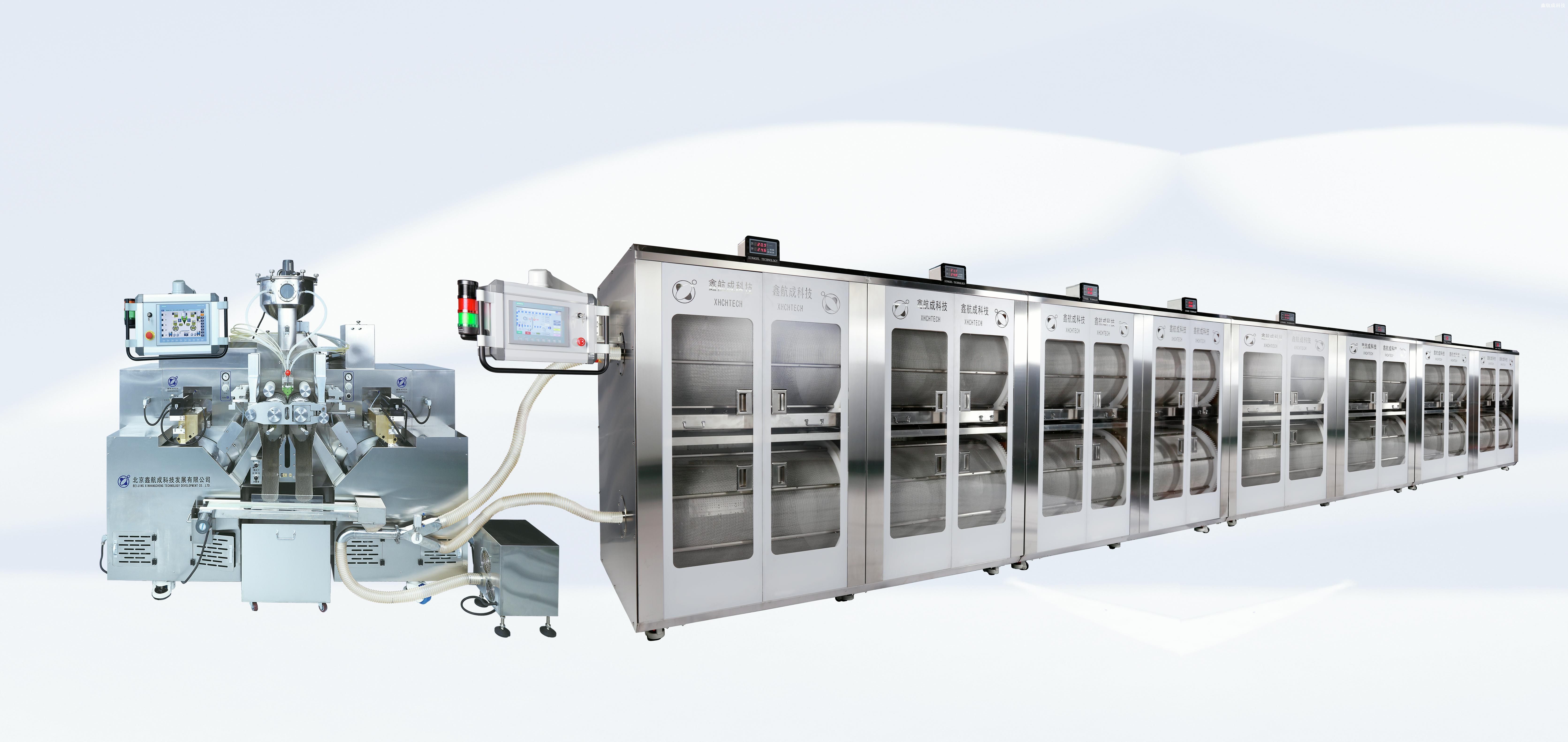
Implementing a standardized approach is essential for reproducible results. Below is an industry-standard procedural framework for effectively flushing marine lipids from your system.
Action Phase | Temperature and Agent | Objective |
|---|---|---|
Mechanical Purge | Ambient Compressed Air or Nitrogen | Evacuate bulk residual oil to minimize chemical usage. |
Hot Water Pre-Rinse | 60°C to 80°C | Melt and displace superficial fats without baking proteins. |
Alkaline Wash | 70°C to 85°C Sodium Hydroxide | Saponify heavy lipids into water-soluble soap compounds. |
Acid Rinse Optional | Ambient to 60°C Citric Acid | Neutralize alkaline residue and remove mineral scale. |
Purified Rinse | Ambient Reverse Osmosis Water | Eliminate all chemical traces to reach neutral pH. |
Drying and Sanitizing | Filtered Compressed Air | Remove all moisture to prevent future oxidation. |
Before introducing any aqueous cleaning solutions, operators must physically purge the system. Utilizing food-grade compressed air or nitrogen, technicians push out the maximum amount of residual oil from the hopper, pumps, and delivery lines. This mechanical purge significantly reduces the organic load that detergents must break down. It ultimately saves valuable time and reduces chemical costs.
The pre-rinse is a critical thermal step where precision is vital. The water temperature must be strictly regulated between 60°C and 80°C. If the water drops below 60°C, the marine fats solidify and block internal valves. In contrast, if the water exceeds 80°C, trace proteins present in unrefined oils undergo thermal denaturation. This bakes the proteins directly onto the stainless steel surfaces. It creates a biofilm foundation that is exceptionally difficult to remove without aggressive scrubbing.
Because oil and water are immiscible, an alkaline detergent is required to break down lipids chemically. High-alkaline, food-grade cleaners initiate a reaction known as saponification. This powerful chemical reaction converts stubborn fish oil triglycerides into water-soluble soaps and glycerol. Once saponified, the heavy fats are effortlessly flushed out of the complex internal pathways of the system.
Following the alkaline wash, a mild acid rinse using citric or phosphoric acid is highly recommended by industry experts. This step serves two primary functions. First, it neutralizes any remaining high-pH alkaline residue that could taint the next batch. Second, it dissolves mineral scale deposited by the facility water supply. Maintaining a scale-free surface prevents localized corrosion on expensive machine components.
To ensure consumer safety and product integrity, the final rinse must utilize purified water. The objective is to flush the system continuously until the effluent water tests at a perfectly neutral pH and shows zero trace of chemical conductivity. This guarantees that the next batch of dietary supplements will remain entirely free of industrial cleaning agents.
Moisture is the absolute enemy of fish oil. Even microscopic water droplets left hiding in a pipe joint accelerate the hydrolysis and oxidation of the next batch. Operators must use oil-free, moisture-free compressed air or a dedicated vacuum drying protocol. This thoroughly dries the entire fluid path. Final sanitization using a volatile, no-rinse food-grade sanitizer ensures the system is microbiologically safe before being sealed for the next production run.
When dealing with heavy marine fats, facility managers often debate between using alkaline cleaners and chemical solvents like ethanol or isopropyl alcohol. Solvents evaporate quickly and easily cut through thick grease. However, they present severe flammability hazards and require specialized explosion-proof ventilation systems. Alkaline solutions are non-flammable and highly effective at saponifying fats. They remain the gold standard for Clean-in-Place operations in nutraceutical manufacturing.
Selecting the correct sanitizer is vital for protecting the longevity of your equipment. Approved sanitizers such as Peracetic Acid are highly effective against resistant bacteria and spores. Peracetic Acid is heavily preferred in the nutraceutical industry because it breaks down naturally into harmless water, oxygen, and acetic acid. It leaves absolutely no toxic residue behind. At proper concentrations, it does not degrade the 316L stainless steel construction of your machinery.
Aggressive cleaning protocols can inadvertently destroy a machine from the inside out. High-chlorine cleaners or excessive concentrations of caustic soda cause pitting in stainless steel. They rapidly degrade food-grade silicone, EPDM, or Teflon seals. Once a seal degrades, microscopic crevices form. These crevices create perfect harboring points for bacteria and oxidized oil. It is imperative to verify that all selected cleaning agents are chemically compatible with the specific elastomers used inside your Precision Capsule Machine. Modern smart encapsulators utilize durable seals specifically engineered to withstand harsh alkaline environments, preventing costly mid-run leaks while maintaining high-speed integrity.
As production demands scale, relying solely on manual cleaning procedures becomes economically unviable. High labor costs, extended downtime, and potential for human error make manual scrubbing a severe bottleneck. Upgrading to advanced processing technology pivots the flushing procedure from a labor-intensive chore to a streamlined, highly predictable operation.
Modern manufacturing relies heavily on Clean-in-Place technology to maintain stringent hygiene standards without dismantling the entire production line. A sophisticated Precision Fish Oil Filling Machine equipped with automated cleaning capabilities utilizes engineered spray balls and controlled fluid dynamics. It cleans internal surfaces autonomously. These systems automatically cycle through pre-rinses, alkaline washes, and purified water rinses at precise flow rates. By maintaining optimal fluid velocity, the system creates sufficient turbulent flow to dislodge sticky marine lipids from pipe walls. This ensures every flush is highly repeatable and filling volume accuracy remains within a strict ±1.5% tolerance.
Even with advanced automated systems, certain components require periodic visual inspection or manual verification. Top-tier equipment features sanitary design principles, such as tri-clamp fittings, quick-release nozzles, and modular dosing blocks. These tool-less disassembly features allow operators to strip the machine down to its bare components in minutes rather than hours. Traditional threaded fittings harbor residual oil and bacteria in their microscopic grooves. Sanitary tri-clamps eliminate these hiding spots, providing a smooth, continuous surface that is effortless to sanitize.
The integration of the filling unit with the broader encapsulation system plays a crucial role in overall cleanliness. Traditional mechanical cam-driven machines often suffer from micro-fluctuations in timing. This leads to oil splashing, weeping nozzles, or external contamination of the machine chassis. In contrast, utilizing an advanced Servo Capsule Maker provides precise digital control over the injection pump and die rollers. Servo motors offer exact synchronization and automatic alignment. The fish oil is injected into the gelatin ribbon with absolute precision. This drastic reduction in oil spillage means operators spend significantly less time scrubbing the exterior chassis and can focus entirely on flushing internal fluid pathways.
The approach to flushing a filling system varies significantly depending on the production volume and the frequency of product changeovers. Facility managers must tailor their Standard Operating Procedures to match their specific operational models to maximize efficiency.
Boutique manufacturers and Contract Manufacturing Organizations often handle multiple small batches per week. A facility might switch from a standard EPA and DHA fish oil to a citrus-flavored emulsion, and then immediately to a plant-based algae oil. In these fast-paced scenarios, preventing flavor and allergen cross-contamination is paramount. Minimizing downtime is equally critical. Operators should employ pre-warmed alkaline solvents kept in dedicated holding tanks to initiate the wash cycle the moment a batch concludes. Utilizing dedicated, interchangeable product contact parts bypasses the need for an exhaustive deep clean between every single minor batch.
For continuous operations producing a single type of marine oil, the flushing strategy shifts from rapid changeovers to periodic deep maintenance. A standard batch-to-batch flush might only require a hot water purge and a mild alkaline wash to prevent immediate oxidation. However, continuous operations must schedule comprehensive deep cleans. During high-volume runs, microscopic layers of protein and lipid gradually build up, eventually forming a biofilm. A deep cleaning protocol involves a complete teardown of the fluid pathways for manual inspection.
Production Type | Changeover Frequency | Primary Flushing Method | Deep Clean Interval |
|---|---|---|---|
Small Batch Facilities | High Daily or Multiple per week | Rapid Automated Wash, Interchangeable Parts | Weekly, or after allergen runs |
High-Volume Continuous | Low Monthly or longer | Automated Standard Wash | Bi-weekly complete teardown |
Flavored Emulsions | Moderate | Alkaline Wash plus Acid Neutralization | After every flavor change |
Even with a detailed operating procedure in hand, operators can inadvertently compromise the flushing process. Understanding the chemical and physical reactions of marine oils is essential to avoiding costly, batch-ruining errors.
Temperature control is the most critical variable in cleaning marine lipids. A frequent mistake is using cold or room-temperature water for the initial purge. Cold water causes fish oil to solidify instantly. It adheres stubbornly to stainless steel surfaces and creates a waxy residue that blocks valves. Conversely, using boiling water above 85°C during the initial rinse causes thermal shock to delicate sensors. More importantly, extreme heat bakes residual proteins directly onto metal surfaces, creating a hardened layer that standard alkaline cleaners simply cannot penetrate.
Dead legs are isolated sections of piping, such as T-joints, sampling ports, or bypass valves. Fluid stagnates here because there is no continuous flow. In poorly assembled equipment, these areas become hidden traps for residual fish oil. Operators often focus entirely on flushing the main hopper and injection nozzles. They completely neglect pressure gauge fittings and bypass valves. Old oil trapped in a dead leg oxidizes rapidly. When the next batch flows through, this rancid oil leaches into the fresh product. It elevates the oxidation value and ruins the entire batch. All valves must be manually actuated during the wash cycle to allow detergents to penetrate these hidden cavities.
Water and oil are fundamentally incompatible. One of the most severe mistakes in the entire changeover process is failing to thoroughly dry the internal components before introducing the next batch of fish oil. Operators sometimes rush this step to resume production quickly. Residual moisture inside the hopper acts as a direct catalyst for hydrolysis. Even a few drops of water cause the fresh fish oil to degrade rapidly, leading to a strong, undesirable fishy odor before the oil even reaches the encapsulation stage.
Consistency is the bedrock of Good Manufacturing Practices. Developing a structured maintenance and flushing checklist ensures that no critical steps are skipped, regardless of which operator is managing the shift.
A tiered checklist helps balance hygiene requirements with production efficiency. Plant managers should implement a documented routine tailored specifically to their machinery.
Daily Batch-to-Batch: Perform a mechanical purge of residual oil. Execute a 70°C hot water pre-rinse, run the standard alkaline wash, and complete the process with a purified water rinse and compressed air drying.
Weekly Preventative Maintenance: Perform the daily flush routine, then execute a tool-less disassembly of nozzles and dosing blocks. Soak these components in an enzymatic cleaner to remove stubborn biofilms. Visually inspect all internal pathways with a borescope.
Monthly Deep System Audit: Perform the weekly routine. Run an acid rinse to remove any mineral scaling from hard water. Replace all porous seals and gaskets. Calibrate fluid velocity and temperature sensors.
The flushing process provides an excellent, built-in opportunity to inspect the equipment for physical wear and tear. Harsh alkaline cleaners and continuous mechanical motion degrade rubber O-rings, food-grade silicone gaskets, and Teflon seals over time. During the weekly disassembly, operators should physically examine these seals. If a gasket feels brittle, shows micro-cracking, or retains a persistent fish odor even after sanitization, it must be replaced immediately. Preventive replacement of these inexpensive parts safeguards the integrity of the high-value fish oil and prevents unexpected mid-run leaks.
Flushing a filling system effectively requires precise thermal management, correct chemical saponification agents, and meticulous drying protocols. Strict adherence to these procedures protects your product from rapid oxidation. It eliminates cross-contamination risks and ensures you pass rigorous compliance audits with flying colors.
While the cleaning process is undeniably strict, it becomes infinitely more manageable when you invest in high-quality, sanitary-design equipment. Advanced machinery equipped with automated cleaning systems and tool-less modularity pivots cleaning from a dreaded chore into a fast, highly efficient routine.
To maintain maximum hygiene standards and drastically reduce costly downtime during batch changeovers, upgrading your production line is the most strategic move. Evaluate your current operational bottlenecks and explore high-performance solutions at sinagel.com to find the exact machinery that fits your facility requirements. Contact our engineering team today for a detailed consultation.
With traditional manual cleaning methods, fully dismantling, scrubbing, and sanitizing the equipment takes between 2 to 4 hours depending on the machine size and complexity. However, if you utilize a modern precision machine equipped with an automated Clean-in-Place system, the entire flushing and sanitization cycle is typically reduced to just 45 to 60 minutes. This significantly improves your overall production uptime.
No, standard commercial dish soaps are entirely insufficient for industrial pharmaceutical or nutraceutical manufacturing. To effectively break down heavy marine lipids and ensure strict compliance with manufacturing standards, you must use industrial, food-grade high-alkaline cleaners. These specialized chemicals saponify the fats, turning them into water-soluble soaps that can be completely rinsed away without leaving any hazardous residue.
The persistent fishy odor is usually caused by oxidized lipids trapped deep within porous materials. To eliminate this, perform a hot water flush followed by a targeted wash using specialized enzymatic cleaners or a mild peracetic acid rinse. Furthermore, rubber and silicone gaskets absorb oils over time. Old, porous gaskets that retain odors should be discarded and replaced regularly as part of your preventative maintenance schedule.
Clean-in-Place is an automated technology integrated into modern manufacturing equipment. It utilizes a network of internal spray balls, high-pressure pumps, and temperature controls to circulate detergents, hot water, and sanitizers through the internal fluid pathways of the machine. This allows the system to be thoroughly washed and sanitized without requiring the operator to manually dismantle heavy mechanical components.
If your fresh batch of oil is oxidizing rapidly after a changeover, residual moisture is the most likely culprit. Water acts as a powerful catalyst for hydrolysis in marine oils. It is absolutely critical to implement a complete drying phase. Utilizing filtered, pressurized compressed air or a vacuum system ensures the internal pathways are bone-dry before introducing the next batch of oil.
The optimal temperature range for the initial hot water pre-rinse is between 60°C and 80°C. For the subsequent alkaline detergent wash, the temperature should be maintained between 70°C and 85°C. Staying within these parameters ensures fats melt and saponify efficiently without causing thermal denaturation of residual proteins.
Validation requires both visual inspection and scientific testing. Operators first conduct a visual check using borescopes to ensure no visible residue remains in dead legs or valves. Following this, the final rinse water is tested for neutral pH and zero chemical conductivity. Finally, ATP swab tests or microbial cultures are taken from product contact surfaces to scientifically prove the absence of organic matter and bacteria.


