
- All
- Product Name
- Product Keyword
- Product Model
- Product Summary
- Product Description
- Multi Field Search
 English
Views: 175 Author: Site Editor Publish Time: 2026-07-27 Origin: Site


Transitioning from traditional solid dosage forms to liquid-filled softgels unlocks major market opportunities. You can rapidly capture consumers seeking faster absorption, increased bioavailability, and easier swallowing profiles. However, scaling your current softgel production requires specialized, highly engineered equipment. Making the wrong purchasing decision often leads to constant production bottlenecks. It causes excessive raw material waste and delayed product launches. Understanding the exact mechanical principles of encapsulation is absolutely critical for your manufacturing success. It allows you to evaluate complex machine specifications properly. You can minimize costly batch rejection rates through informed equipment selection. You also ensure strict regulatory compliance from the very first production run. This comprehensive article provides a detailed breakdown of the rotary die encapsulation process. We will thoroughly explore the auxiliary equipment requirements necessary for continuous, uninterrupted operation. Finally, you will receive an evidence-based framework. You can use this guide to confidently evaluate and shortlist the best machines for your specific facility needs.
The industry standard relies on the rotary die encapsulation method to simultaneously form, fill, and seal softgels.
Procuring a softgel encapsulation machine is only part of the investment; a functional setup requires an integrated softgel manufacturing process including melting tanks and drying systems.
Evaluation should center on tooling precision (to prevent leakage), changeover efficiency, and cGMP compliance rather than just theoretical maximum output.
Implementation success depends heavily on facility climate control (HVAC) and operator training for continuous troubleshooting.
Modern softgel production depends heavily on continuous, uninterrupted operation. The industry standard utilizes the rotary die encapsulation machine. This highly advanced equipment simultaneously forms, fills, and seals the capsules in one seamless motion.
The rotary die method is exceptionally efficient. Two flat ribbons of gelatin feed downward into a set of twin rotating dies. These die rolls feature perfectly matching cavities machined to microscopic tolerances. As they rotate together, they stretch and form the softgel shell. At the exact moment the shell halves meet, a specialized pump injects the liquid fill. Heat and mechanical pressure seal the capsule instantly.
Understanding this process helps you identify potential failure points early.
Gelatin Preparation & Ribbon Formation: Operators pump heated, molten gelatin into precision spreader boxes. These boxes cast uniform ribbons over continuously rotating cooling drums. Ribbon uniformity heavily dictates shell thickness. Inconsistent ribbons invariably lead to high defect rates and premature capsule rupture.
Filling & Injection: The machine uses a positive displacement wedge pump. It injects highly precise doses of fill material between the converging ribbons. Fill materials can include simple oils, dense pastes, or complex botanical suspensions. The wedge itself is heated to slightly soften the gelatin right before injection.
Sealing & Cutting: The die rolls apply meticulously controlled heat and pressure. They hermetically seal the two ribbon halves together. The raised, sharp edges of the die cavities simultaneously cut the finished capsule away from the surrounding gelatin web.
Discharge: Formed capsules drop from the gelatin web into a designated collection chute. They subsequently move to a conveyor belt for initial tumble drying. The remaining perforated gelatin web travels to a recycling station for material recovery.
Best Practice: Always calibrate wedge pump timing before starting a new batch. Misaligned injection timing causes severe leakage and compromises the hermetic seal.
Buying a main encapsulator is rarely enough to start production. A highly functional facility requires a thoroughly integrated softgel manufacturing process. You need extensive supporting systems for material preparation and final finishing.
You must flawlessly prepare both the shell material and the core liquid. Gelatin melting and mixing tanks require precise thermal jackets to maintain strict temperature gradients. They also need robust vacuum de-aeration capabilities. This vacuum removes trapped micro-air bubbles from the viscous gelatin mass. Medicine preparation tanks mix the active pharmaceutical ingredients into the chosen carrier oil. They utilize high-shear homogenizers to prevent particle settling.
This unit forms the beating heart of your entire operation. The primary softgel encapsulation machine controls the critical dosing parameters. It requires immediate, dedicated lubrication and chilling systems. Advanced units precisely manage cooling drum temperatures using external recirculating chillers. This rapidly stabilizes the freshly cast gel ribbon before it reaches the dies.
Freshly formed capsules contain excessive amounts of moisture. They are extremely fragile and susceptible to physical damage. Inline tumble dryers provide rapid initial moisture reduction. Their gentle tumbling action prevents capsule deformation during the vulnerable transfer phase. Afterward, drying tunnels or specialized curing trays handle the slow, final curing process. Finally, automated optical inspection equipment or manual sorting tables identify and remove leakers, twins, and mis-shapes.
Production Phase | Required Equipment | Primary Function |
|---|---|---|
Upstream Processing | Melting Tanks & Vacuum Mixers | Prepare bubble-free gelatin and perfectly homogenize fill liquid. |
Encapsulation Unit | Main Encapsulator & Recirculating Chiller | Form ribbons, inject fill material, and hermetically seal capsules. |
Downstream Processing | Tumble Dryers & Optical Sorting Machines | Reduce shell moisture, cure softgels, and remove defective units. |
Facility space and commercial requirements vary drastically. You must select capsule production equipment matching your specific output goals. Manufacturers typically categorize these machines into three distinct tiers.
These are highly compact, single-die machines designed for testing environments. They feature manual changeovers and a minimal facility footprint. They consume very little electrical power.
Best for: Rigorous formulation testing and early-stage clinical trials.
Ideal use case: Producing highly specialized, low-volume nutraceuticals.
Limitation: They absolutely cannot sustain rapid commercial production speeds. They lack the cooling capacity for continuous runs.
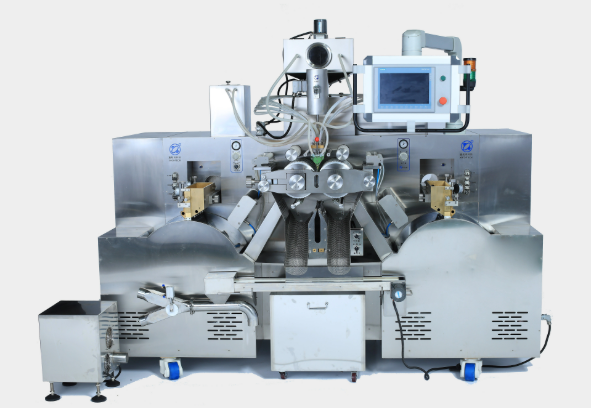
These units offer a practical bridge to mass production. They feature semi-automated electronic controls and highly modular tooling systems.
Best for: Rapidly growing contract manufacturing organizations (CMOs).
Ideal use case: Established supplement brands bringing previously outsourced production in-house.
Output expectations: They consistently deliver a balanced yield of 30,000 to 50,000 capsules per hour. They provide an excellent balance between cost and performance.
These comprehensive systems represent the absolute pinnacle of automated production. They feature fully automated PLC integration and auto-lubrication manifolds. Many advanced models include Clean-in-Place (CIP) capabilities.
Best for: 24/7 continuous pharmaceutical manufacturing facilities.
Ideal use case: Large-scale global supplement brands requiring massive daily output volumes.
Output expectations: They effortlessly produce over 100,000 capsules per hour. They maintain strict precision even at maximum operational speeds.
Selecting the right encapsulation machinery dictates your long-term profitability. Do not look solely at the theoretical maximum output. You must critically evaluate the engineering quality, material longevity, and compliance standards.
Die roll tolerances directly impact your capsule seam thickness. Poorly machined tooling inherently causes high leakage rates. It drastically increases expensive raw material waste. Look for manufacturers offering ultra-precise, aviation-grade machining. Consistent tooling guarantees a strong, uniform capsule seal. It prevents the capsules from rupturing during packaging or transport.
Frequent product formulation changes can severely stall your production line. Evaluate exactly how quickly an operator can swap out heavy die rolls. Carefully monitor the time needed to change and realign wedge pumps. Moving from a 500mg oval capsule to a 1000mg oblong capsule should be seamless. Faster mechanical changeovers directly improve your overall operational uptime.
Modern pharmaceutical and nutraceutical applications require strict electronic data integrity. Ensure the machine features robust, 21 CFR Part 11 compliant PLC touchscreens. You desperately need secure recipe management and unalterable electronic audit trails. These embedded controls prevent unauthorized parameter changes during a run. They dramatically simplify your mandatory regulatory compliance audits.
Traditional machines literally soak the gelatin ribbon in food-grade mineral oil. This outdated method requires extensive, labor-intensive post-production cleaning. Advanced machines utilize highly precise micro-lubrication technology. They apply microscopic amounts of oil during the ribbon forming phase. This significantly reduces chemical cleaning costs. It also noticeably shortens the downstream capsule drying times.
Global regulatory bodies mandate incredibly strict material contact standards. You must definitively ensure all product contact parts use highly polished 316L stainless steel. Peripheral gaskets and hydraulic seals must utilize certified FDA-approved food-grade materials. Verify these material certifications meticulously before placing any major equipment orders. Ensure the vendor provides full Installation Qualification and Operational Qualification (IQ/OQ) documentation.
Even the most advanced soft capsule machine will fail spectacularly in a poorly prepared facility. You must proactively anticipate operational risks. This ensures a smooth and profitable product launch.
Softgel production strictly requires highly controlled climate conditions. The ambient room temperature must consistently remain between 20-22°C. Relative humidity must stay exceptionally tight, strictly between 20-40%. Relying on standard commercial air conditioning is a massive mistake. You often need specialized desiccant wheel dehumidifiers. Failure to upgrade your HVAC systems invariably leads to disaster. Your capsules will become overly sticky or highly brittle, regardless of machine quality. Proper environmental control remains entirely non-negotiable.
Do not underestimate the supporting utility requirements. Your initial setup absolutely requires robust industrial water chillers to cool the casting drums. You also need high-capacity, oil-free air compressors to operate pneumatic machine components. Furthermore, gelatin recovery systems remain essential for minimizing expensive material waste. Your facility design must seamlessly accommodate the heavy power draw and physical space requirements for these utilities.
Highly automated machines definitely reduce common manual errors. However, they naturally introduce entirely new operational challenges. They require highly skilled, technically proficient technicians for daily setup and troubleshooting. If a digital pressure sensor fails, your operators must know exactly how to diagnose it. Invest heavily in ongoing technical training. Develop comprehensive Standard Operating Procedures (SOPs) for every single machine component.
Unexpected machine downtime completely destroys your planned production schedules. You should prioritize equipment vendors offering highly reliable local spare parts availability. You desperately need incredibly fast tooling repair and resharpening services. Responsive original equipment manufacturer (OEM) technical support heavily minimizes unexpected delays. Establish a rigid, daily preventive maintenance schedule immediately after the final installation.
A softgel encapsulator acts as a critical precision instrument. It directly dictates the quality and profitability of your liquid-dose products. Base your final purchasing decision on logical alignment. Match your facility infrastructure and formulation requirements to the machine capabilities. Always verify the vendor has a strong track record of post-installation support. Do not finalize a purchase order blindly. Request a comprehensive Factory Acceptance Test (FAT). Alternatively, demand a pilot run using your exact fill material. This proactive approach prevents costly surprises and guarantees long-term operational success.
A: Hard gelatin machines fill pre-fabricated two-piece shells with dry powders or granules. A softgel machine continuously forms the shell from a liquid gelatin ribbon. It injects a liquid or semi-solid fill, hermetically sealing the capsule in one simultaneous step.
A: A high-capacity commercial line requires significant floor space. You typically need 1,500 to 2,500 square feet. This accommodates the main encapsulator, melting tanks, chillers, tumble dryers, and curing tunnels. Always account for proper operator walkways and HVAC ducting.
A: Yes, modern encapsulators can process vegan films. However, they require specific equipment modifications. Vegan gels possess higher viscosities and require higher melting temperatures. You must upgrade the thermal jackets, spreader boxes, and wedge pumps to prevent material blockages.
A: You should expect a lead time of three to six months. Customizing the tooling, integrating specialized PLC controls, and conducting factory testing take time. Complex pharmaceutical-grade systems or international shipping requirements will push delivery times to the longer end.


