
- All
- Product Name
- Product Keyword
- Product Model
- Product Summary
- Product Description
- Multi Field Search
 English
Views: 132 Author: Site Editor Publish Time: 2026-09-12 Origin: Site


Manual and semi-manual softgel lines eventually hit a hard ceiling. You face inconsistent batch yields, rising labor costs, and frustratingly long changeover times. These common bottlenecks constantly prevent manufacturing facilities from scaling output to meet sudden market demand. However, upgrading your encapsulation line is never a simple plug-and-play fix. True transformation requires a systematic approach and deep technical understanding. You must rigorously evaluate available technology and allocate capital wisely to see tangible returns.
This article serves as a realistic framework for production directors and facility managers. We will show you exactly how to evaluate, justify, and implement equipment upgrades across your facility safely. You will learn to identify hidden process bottlenecks quickly. We also explain how to leverage key performance metrics and navigate the complexities of regulatory compliance. Ultimately, this guide helps you build a smarter, more resilient production floor.
Efficiency is measurable: True softgel production efficiency relies on improving Overall Equipment Effectiveness (OEE), specifically by reducing micro-stops and standardizing changeovers.
Targeted automation yields the best ROI: Upgrading specific bottlenecks—such as gelatin preparation, inline drying, or optical inspection—often provides faster returns than full-line replacements.
Compliance is non-negotiable: Any capsule automation system must align with strict data integrity standards (e.g., FDA 21 CFR Part 11) for pharmaceutical manufacturing.
Vendor evaluation requires proof: Shortlisting should rely heavily on Factory Acceptance Testing (FAT) parameters and demonstrable handling of complex formulations.
Gelatin preparation determines the success of your entire run. Manual monitoring relies heavily on operator intuition and basic temperature gauges. This approach often leads to improper melting and poor mixing. When viscosity fluctuates, ribbon thickness becomes highly inconsistent. Operators must constantly adjust the spreader boxes to compensate. Thick ribbons waste expensive gelatin material daily. Thin ribbons cause weak capsule seams and devastating leaks. By relying on manual checks, you guarantee a baseline of yield loss. Operators simply cannot react fast enough to micro-changes in thermal mass. This manual lag inherently limits overall softgel production efficiency.
Product changeovers drain profitability on manual lines. Mechanical die roll alignment takes considerable skill and patience. Operators must manually set the injection wedge timing for each new product run. They adjust temperatures, wait for equilibrium, and test multiple batches. This trial-and-error process compounds downtime significantly. Every minute spent tweaking mechanical gears is a minute of lost production. Human error during these setups often forces unexpected machine stops mid-run. You also risk damaging expensive tooling if mechanical synchronization fails slightly. Standardizing this workflow proves impossible without software-driven precision.
Manual visual inspection remains a massive operational bottleneck. Human eyes quickly suffer from fatigue when scanning thousands of capsules. Operators routinely miss minor cosmetic defects, micro-leaks, and twin capsules. Conversely, they often reject perfectly good products out of excessive caution. False rejection rates skew your true batch yield metrics badly. Managing a large team of inspectors also drives up overhead costs. You must cycle operators frequently to maintain focus and accuracy. This labor-intensive process prevents you from pushing encapsulation machines to their maximum rated speeds. Your production ceiling becomes tied directly to human visual limits.
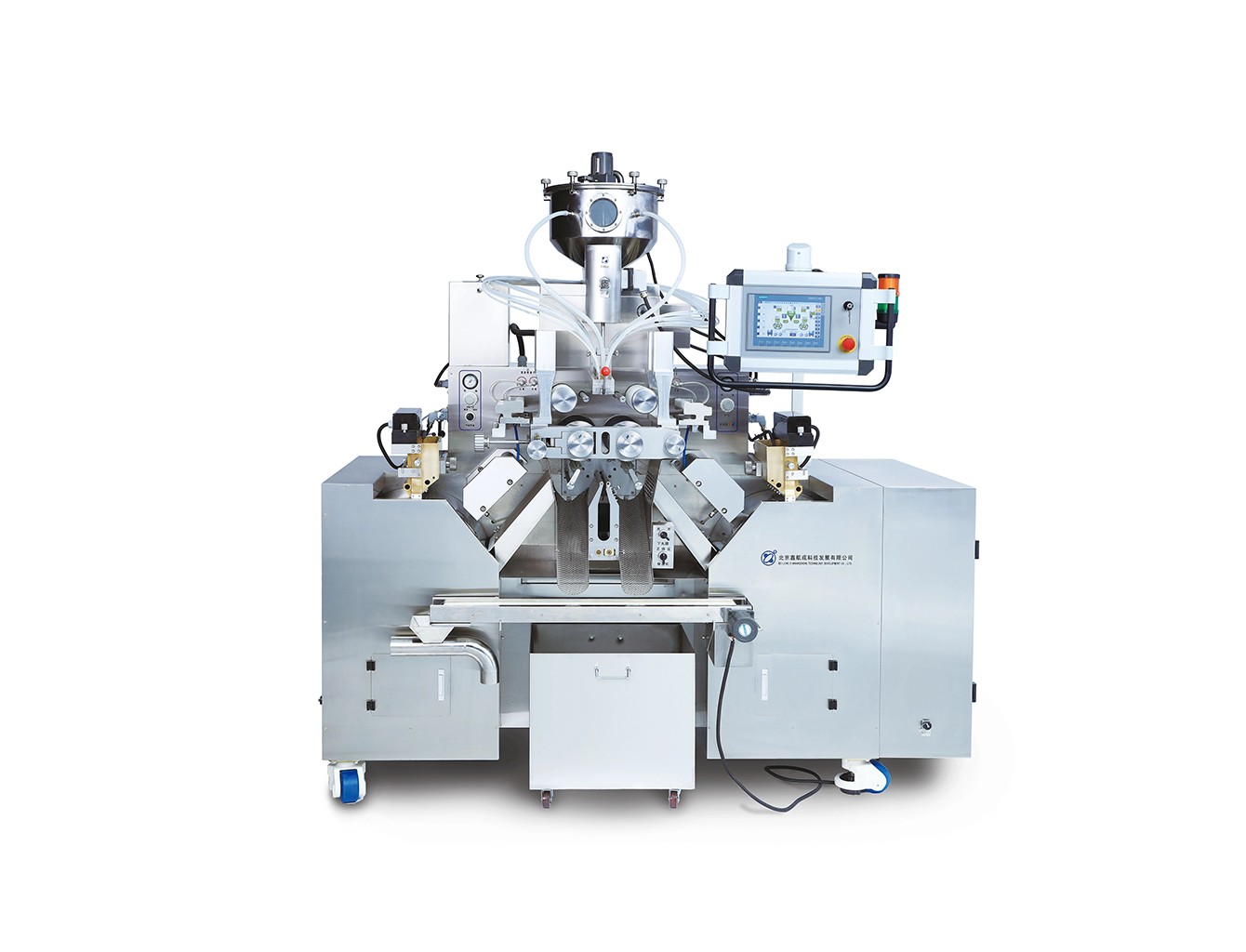
Modern medicine preparation removes operator guesswork entirely. These systems utilize advanced Programmable Logic Controllers (PLCs). They actively manage temperature gradients, vacuum deaeration, and mixing speeds. Operators simply select a recipe, and the system executes it flawlessly.
Closed-loop feedback sensors monitor viscosity and mass in real-time.
Automated valves control water jacket temperatures to prevent localized burning.
Vacuum systems automatically remove trapped air bubbles to ensure clear gelatin.
These smart systems guarantee batch-to-batch consistency. They provide a stable foundation for high-speed automated softgel production. When your gelatin mass is perfect, downstream encapsulation runs seamlessly.
Legacy machines rely on physical gears and mechanical linkages. Modern systems replace these with precise servo motors. Servo-driven die rolls allow operators to make micro-adjustments during active operation. You no longer need to stop the machine to fix timing issues. Advanced controls also monitor fill-volume delivery constantly. The system checks pump pressure and adjusts stroke lengths dynamically. This prevents both under-dosing and over-dosing of valuable active ingredients. Operators monitor everything through a centralized touchscreen interface. The machine actively flags out-of-spec parameters before they cause a batch failure.
Static tray drying is incredibly labor-intensive and spatially inefficient. Facilities are now transitioning to continuous inline drying tunnels. These automated systems tumble capsules through climate-controlled zones precisely. Sensors monitor humidity and capsule moisture content continuously. Once dried, capsules flow directly into intelligent inspection units. High-speed machine vision systems replace human inspectors completely. Artificial intelligence algorithms detect leakers, twins, and color variations instantly. The machine uses pneumatic blasts to eject flawed capsules automatically. This continuous flow drastically reduces handling time and minimizes contamination risks.
Overall Equipment Effectiveness (OEE) is the ultimate metric for your facility. You must calculate the financial impact across three distinct categories: availability, performance, and quality. Automation significantly reduces micro-stops and setup times, boosting availability. Servo-driven machines run closer to their theoretical maximum speeds, increasing performance. Vision systems catch defects early, drastically improving your first-pass quality yield.
OEE Component | Manual Process Limitation | Automated System Benefit |
|---|---|---|
Availability | Long mechanical changeovers and frequent micro-stops. | Recipe-driven setups and auto-timing reduce downtime by up to 60%. |
Performance | Speed capped by manual QC and manual viscosity checks. | Continuous inline processing allows machines to run at maximum rated speed. |
Quality | Human inspection fatigue causes false rejects and missed leaks. | AI vision systems provide 99.9% accuracy on cosmetic and structural defects. |
Many managers mistakenly view automation strictly as a headcount reduction tool. You should frame the ROI differently for long-term success. A modern capsule automation system eliminates tedious manual handling. It allows you to shift operators into high-value supervisory roles. Your team moves from moving trays to performing advanced quality assurance. They analyze production data, optimize recipes, and manage preventive maintenance. Upskilling your existing workforce improves employee retention and reduces repetitive strain injuries. You gain a smarter team capable of managing higher production volumes effectively.
Raw materials represent a massive portion of your operating budget. Active Pharmaceutical Ingredients (APIs) are particularly expensive. Automated dosing systems eliminate the need to overfill capsules. They hold tight volumetric tolerances across millions of doses. Furthermore, automated spreader boxes maintain exact gelatin ribbon thicknesses continuously. Even a 0.01mm reduction in excess ribbon thickness saves thousands of dollars annually. When you combine precise dosing with reduced gelatin waste, the financial savings accumulate rapidly. This material efficiency often pays for the automation upgrade itself.
Legacy facilities were rarely designed for continuous automation. Upgrading older systems often presents severe spatial realities. Automated drying tunnels are inherently bulkier than stackable static trays. Material handling pipelines require specific overhead clearances. You must audit your current floor plan meticulously. Consider modular equipment designs if floor space is highly restricted. Proper HVAC integration is also critical for new drying equipment. The ambient cleanroom conditions must handle increased heat and moisture loads. Neglecting these facility constraints often leads to delayed installations and budget overruns.
Regulatory compliance dictates every move in pharmaceutical manufacturing. You cannot simply plug in a new machine and start production. Your team must execute rigorous IQ/OQ/PQ protocols. Installation Qualification (IQ) proves the equipment matches the design spec. Operational Qualification (OQ) tests the machine limits. Performance Qualification (PQ) verifies consistent product quality. Furthermore, software-driven machines must integrate securely with your SCADA systems. You must maintain strict electronic audit trails to satisfy FDA 21 CFR Part 11 requirements. Detailed validation master plans are absolutely essential.
Transitioning from mechanical workflows to software-reliant operations creates natural friction. Veteran operators often resist trusting touchscreen controls over manual dials. You must address this cultural shift proactively. Robust vendor training programs are non-negotiable. Operators need hands-on time to understand PLC logic and automated alarms. Standard Operating Procedures (SOPs) must be completely rewritten and simplified. We highly recommend identifying internal champions early in the process. These tech-savvy operators will help train others and drive daily adoption on the floor.
Equipment looks great on paper, but formulation realities are harsh. You must assess whether the vendor's technology handles complex scenarios confidently. Can their mixing tanks handle highly viscous API suspensions without clogging? Can the encapsulation unit process plant-based, vegan gelatin alternatives effectively? Vegan mass behaves very differently from traditional bovine gelatin. It requires tighter temperature controls and specialized pump designs. Ask vendors for specific case studies matching your exact product profiles. Do not accept generic promises regarding formulation flexibility.
Never approve shipment until the equipment proves itself fully. A Factory Acceptance Test (FAT) is your final safeguard. Define what a successful FAT looks like before signing the contract. Do not rely solely on the vendor's standard testing procedures.
Provide your actual API formulations and gelatin mass for the test run.
Require the machine to run continuously for several hours to test thermal stability.
Simulate power failures and operator errors to test software recovery protocols.
Verify all data logging and CFR Part 11 compliance exports locally.
Strict FAT protocols eliminate nasty surprises during final facility installation.
The best equipment eventually requires troubleshooting and maintenance. Analyze the vendor's post-sales support infrastructure critically. Long-term production optimization relies on minimizing unexpected downtime. Ask where their localized spare parts are actively warehoused. Determine their guaranteed field service response times for your specific region. Modern equipment should also feature secure remote troubleshooting capabilities. This allows vendor engineers to diagnose software glitches without traveling. A responsive support network is just as vital as the machine hardware itself.
Upgrading softgel production efficiency requires a calculated, strategic shift. You must move away from reactive, manual machine operations entirely. Instead, you need to embrace proactive, data-driven process controls. Automation eliminates the micro-stops and formulation inconsistencies holding your facility back.
Successful adoption always requires a careful balancing act. You must align aggressive ROI goals with uncompromising cGMP compliance standards. Start by auditing your current highest-friction bottlenecks today. Document your scrap rates, manual changeover times, and inspection labor costs. Use this hard data to justify targeted upgrades before engaging any vendors. By taking a systematic approach, you will build a highly profitable, future-proof manufacturing line.
A: ROI depends heavily on your production volume and the value of your API. Generally, facilities see full returns within 12 to 36 months. This calculation factors in massive material savings, reduced scrap rates, and the strategic reallocation of manual inspection labor.
A: Yes, modern machine vision AI is highly adaptable. It easily learns unique product profiles, distinct shapes, and two-tone color variations. Advanced systems use adjustable lighting and 360-degree cameras to eliminate shadows, ensuring accurate defect detection across complex batches.
A: Not necessarily. Facilities often utilize phased rollout strategies. You can integrate modular upgrades, such as automated inline drying tunnels or optical inspection units, over a weekend. This targeted approach significantly minimizes facility downtime while you gradually modernize the entire line.


