
- All
- Product Name
- Product Keyword
- Product Model
- Product Summary
- Product Description
- Multi Field Search
 English
Views: 165 Author: Site Editor Publish Time: 2026-09-01 Origin: Site


Every successful softgel begins as raw gelatin powder. The gelatin melting system stands as the foundational starting point of modern capsule manufacturing. If you get this initial step wrong, the entire production batch suffers. The quality of your gelatin mass directly impacts encapsulation efficiency. It determines capsule integrity and overall yield. Poor melting leads to micro-bubbles, uneven ribbons, and leaking capsules. You need to balance thermal precision and vacuum deaeration capabilities carefully. You must also consider integration across downstream softgel process equipment. Proper integration ensures strict cGMP compliance. It also minimizes expensive batch rejections. In this comprehensive guide, we explore the core functions of these melters. You will learn about jacketed tank designs and agitation mechanics. We will also cover essential evaluation criteria. These insights will help you select the optimal setup for your facility needs.
The primary role of a gelatin melting system is to hydrate, heat, blend, and deaerate gelatin mass or plant-based alternatives to a precise viscosity.
Advanced systems utilize three-layer jacketed tanks, specialized agitators, and automatic vacuum deaeration to eliminate micro-bubbles.
Selecting the right system requires matching tank capacity (e.g., 600L to 1000L) with the continuous throughput of your encapsulation machines.
Implementation success depends heavily on the equipment's clean-in-place (CIP) capabilities and the vendor's IQ/OQ/PQ validation documentation.
Raw gelatin powder requires precise hydration before anything else. You introduce purified water and plasticizers like glycerin or sorbitol into the mixing vessel. The system applies controlled heating to start the phase change. Water-jacketed tanks distribute heat gently across the mixture. They melt the ingredients slowly without causing thermal degradation. If you apply heat too rapidly, the gelatin proteins denature. Denaturation ruins the elasticity of your final capsule shell. Best practices for thermal processing include:
Pre-heating the purified water before adding gelatin powder.
Monitoring the internal temperature gradient constantly.
Stirring slowly during the initial hydration phase to prevent clumping.
Agitators play a vital role in creating a uniform mass. Many commercial units use anchor or turbine style mixers. They ensure uniform heat distribution across the entire volume. They prevent localized burning along the inner tank walls. Thorough homogenization prevents unblended pockets. You must achieve a perfectly smooth liquid mass. Without proper agitation, the mixture develops hard spots. These inconsistencies disrupt the ribbon formation later on the encapsulation machine. Operators often face rejected batches when agitation fails to break down persistent powder lumps.
Mixing inherently traps air inside the fluid matrix. Removing this entrapped air is a critical process step. Automated vacuum deaeration systems pull these micro-bubbles out of the heavy liquid. Trapped air causes severe structural weaknesses in the cured shell. It creates visual defects like cloudy or pitted capsules. It also leads to seal failures along the capsule seam. A strong vacuum system guarantees a clear, robust final product. Common mistakes during deaeration include:
Pulling a vacuum too quickly, causing the mass to foam and boil over.
Using degraded vacuum pump seals, which allows air to leak back into the tank.
Stopping the deaeration cycle before reaching optimal negative pressure.
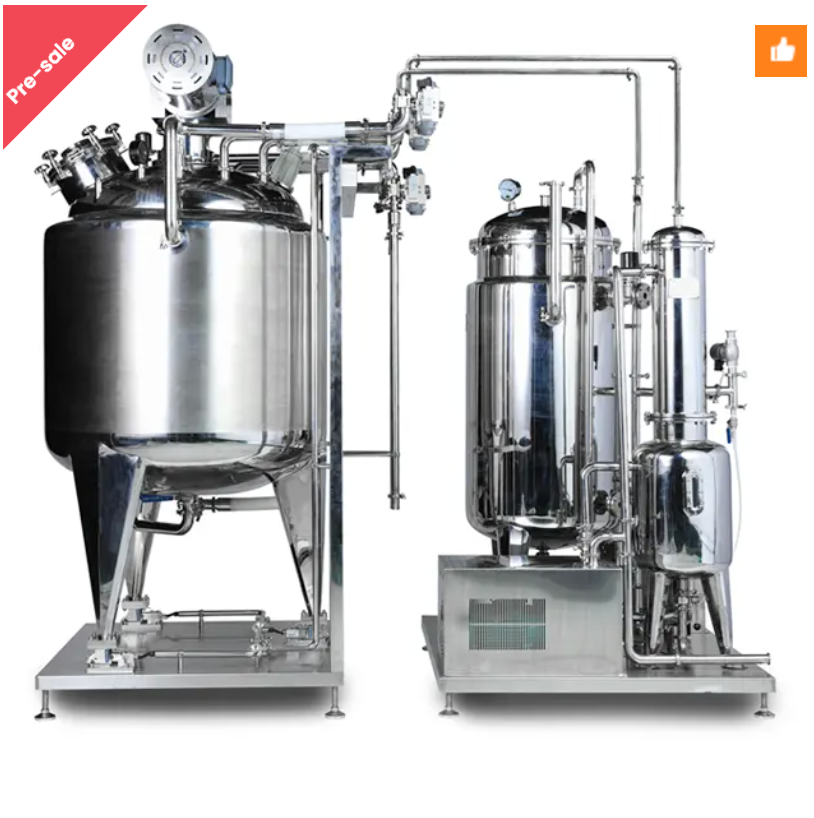
Modern gelatin melting equipment relies on highly sophisticated vessel engineering. The three-layer jacketed tank design forms the core of the machine. The inner contact layer consists of polished 316L stainless steel. It prevents sticky material adhesion. The middle heating and cooling jacket circulates hot water or thermal oil. It regulates the internal temperature precisely across a large surface area. The outer insulation layer protects plant operators from severe burns. It also improves energy retention by keeping the internal heat trapped inside the vessel.
Mixer placement matters significantly in facility design. Bottom-driven mixers save valuable overhead space in low-ceiling rooms. Top-driven mixers simplify the bottom discharge valve mechanics. Most industrial units feature scraping blades attached to the main anchor. These blades wipe the inner walls continuously. They stop thick gelatin mass from baking onto the hot metal surfaces. Variable frequency drives (VFDs) power these robust motors. VFDs manage changing viscosities efficiently. As the gelatin melts, it thickens. You can adjust the rotational speed dynamically to match the current fluid resistance.
You can choose single standalone tanks or fully integrated processing skids. Standalone tanks require separate facility utility connections. They demand custom pipework and complex on-site wiring. In contrast, skid-mounted gelatin preparation system units arrive completely pre-assembled. They include pre-plumbed vacuum pumps on a single metal frame. They feature integrated heat exchangers and centralized touch-screen control panels. Skids reduce installation time drastically. They offer a reliable plug-and-play solution for busy pharmaceutical plants.
You must calculate your necessary vessel volume carefully. Match your tank capacity to the continuous feed rate of your encapsulation line. Do not buy an oversized tank for a small machine. The gelatin might degrade thermally while waiting to be used. Conversely, an undersized tank starves the production line.
Tank Capacity | Estimated Melting Cycle Time | Supported Encapsulation Lines |
|---|---|---|
600 Liters | 1.5 - 2 Hours | 1 Standard Speed Line |
800 Liters | 2 - 2.5 Hours | 1-2 Standard Lines |
1000 - 1200 Liters | 2.5 - 3 Hours | 2-3 High-Speed Lines |
Evaluate competing heating systems closely. Electric heating elements offer simplicity and compact footprints. Facility steam provides much faster heat transfer for larger volumes. The accuracy of PID temperature controllers is strictly non-negotiable. Tight temperature bands prevent overheating and protein degradation. Highly accurate PT100 temperature sensors should monitor both the jacket fluid and the internal product mass.
Strict regulatory compliance drives equipment choices in this industry. You must use FDA-approved contact materials exclusively. Internal finishes require rigorous mechanical polishing. An Ra value below 0.4µm is the industry standard. Smooth internal surfaces prevent cross-contamination between different product batches. Strict adherence to cGMP standards protects your production license during external audits. Always verify the welding quality. Poor welds harbor dangerous bacterial growth.
Market demands and formulations change constantly. You might run traditional bovine or porcine gelatin today. Tomorrow, you might need to process plant-based vegan alternatives. Tapioca starch and carrageenan blends create massive high-viscosity challenges. They require significantly higher melting temperatures to hydrate fully. To handle vegan formulations, ensure your equipment features:
Upgraded high-torque motors capable of pushing through dense starch masses.
Heavy-duty scraping blades designed to withstand intense mechanical stress.
Heating jackets rated for elevated temperature ranges well above standard gelatin needs.
Subpar vacuum systems cause major production headaches. Rushed melting cycles leave residual air behind in the fluid. These micro-bubbles lead to porous, weak capsule shells. The final softgels often leak active ingredients during the tumble drying phase. You must wait for the vacuum to achieve absolute stabilization. Frequent maintenance of vacuum pump oil and sealing rings prevents unexpected pressure drops.
Uneven jacket heating creates severe viscosity inconsistencies. Inadequate or slow agitation leaves the mass unblended. In some cases, the gelatin becomes too thick to transfer through the facility pipes. Sometimes it gets too thin to form a proper ribbon on the casting drums. Both scenarios halt production lines immediately. You can avoid this by using calibrated viscometers and strictly defined thermal recipes.
Changeover downtime drains operational profitability. Older manual systems lack integrated CIP (Clean-in-Place) functionality. Manual cleaning wastes hours of valuable labor. You face massive operational drag when switching distinct colorants or active pharmaceutical ingredients (APIs). Modern SIP (Sterilize-in-Place) systems automate this entire chore. High-pressure spray balls ensure every internal corner receives thorough sanitization.
Temperature drops ruin perfectly prepared gelatin. Moving mass from the main melter to heated service tanks poses severe risks. If the transfer pipes lack thermal insulation, the mass cools rapidly. Cooled gelatin solidifies and clogs the transfer valves. It ultimately starves the encapsulation machine. Always utilize heat-traced transfer hoses. Ensure your receiving service tanks are pre-heated before initiating any mass transfer.
Map out your available production floor space first. Measure your exact ceiling height. You need adequate vertical clearance for agitator shaft removal during deep maintenance. Check your available facility utilities comprehensively. Verify your chilled water supply flow rates. Ensure you possess adequate steam pressure and sufficient electrical load capacity to power multiple high-torque motors simultaneously.
Documentation proves manufacturing quality. Insist on comprehensive turnover packages from your equipment supplier. Demand Material Test Reports (MTRs) for all stainless steel components. Review the orbital welding logs carefully. Require strict IQ/OQ/PQ validation protocols prior to shipment. These critical documents guarantee smooth regulatory audits and verify system performance against design specifications.
Complex formulations demand real-world testing. Novel vegan recipes often behave unpredictably under thermal stress. Require a factory acceptance test (FAT) at the manufacturer's facility. Run the test using your specific proprietary formulation parameters. A successful physical proof of concept validates your engineering choices. It removes the risk of discovering fundamental viscosity issues after equipment installation.
The melting process dictates your overall manufacturing success. These machines act as highly controlled thermal and vacuum environments. They form the absolute backbone of softgel quality. To improve your operations, take these specific steps:
Audit your current batch rejection rates immediately to identify formulation processing flaws.
Identify if trapped micro-bubbles or viscosity issues drive your highest material waste.
Evaluate if upgrading to fully automated skid systems justifies the process optimization.
Transition to CIP-enabled tanks to reclaim lost changeover hours and boost throughput.
A: Melters are for compounding, heating, and deaerating raw ingredients. They perform the heavy mixing. Service tanks, or transfer tanks, are smaller, heated vessels. They maintain the existing temperature and feed the encapsulation machine continuously. Service tanks do not melt raw powder.
A: Depending on the volume, formulation, and heating method, a complete cycle typically takes between 1.5 to 3 hours. This duration covers initial hydration, thermal melting, and final vacuum deaeration.
A: Often, no. Vegan formulations like starch or carrageenan blends typically require significantly higher melting temperatures. They generate much higher viscosities. This necessitates upgraded high-torque motors, specialized agitator designs, and higher-rated heating jackets.


