
- All
- Product Name
- Product Keyword
- Product Model
- Product Summary
- Product Description
- Multi Field Search
 English
Views: 0 Author: Site Editor Publish Time: 2026-10-09 Origin: Site


Scaling softgel production requires balancing upfront capital expenditure against long-term operational efficiency. Transitioning from manual processes to automated systems remains a critical bottleneck for growing nutraceutical manufacturers. Facility managers often struggle to justify large equipment purchases. We provide a definitive capsule equipment comparison to solve this.
This guide strips away marketing claims completely. We objectively evaluate throughput, precision, and compliance. Our goal is simple. We equip procurement teams with a clear decision-stage framework. You will determine exactly when the operational shift to an automatic softgel machine becomes mathematically and practically justified.
Throughput vs. Flexibility: Manual machines excel in high-mix, low-volume R&D environments; automatic machines are built for continuous, high-yield commercial runs.
Labor Economics: Automatic encapsulation shifts labor costs from continuous manual operation to periodic monitoring and preventive maintenance.
Batch Consistency: Automation drastically reduces human error, ensuring tighter fill-weight tolerances and strictly reproducible data for regulatory compliance.
The TCO Tipping Point: The true cost difference lies not in the initial purchase price, but in long-term waste reduction, labor savings, and production efficiency.
Operators manage manual units by hand. They pace the gel ribbon feeding manually. They align the rotary dies using visual checks. They control the heating wedge temperature entirely by feel. The wedge usually operates around 37 to 42 degrees Celsius. You rely completely on human consistency. The operator must watch the gelatin thickness constantly. They adjust the tension manually. This approach works for simple batches. However, it fails under commercial volume demands. You cannot scale human precision infinitely. Mistakes happen when hands get tired.
Output speed ties directly to operator skill. Seal quality inevitably drops as worker fatigue sets in. You see more leaking capsules at the end of a long shift. You experience higher variance in shell thickness.
Conversely, an automatic setup utilizes continuous rotary die technology. Systems synchronize gelatin ribbon casting automatically. Laser sensors monitor ribbon thickness down to the millimeter. Servo drives pump liquid medicine precisely into the gelatin shell. Cooling and sealing happen continuously without human intervention. The system auto-lubricates the gelatin ribbon. It uses precise amounts of mineral oil. You never worry about excess oil ruining the seals.
You need precise initial calibration before starting. The machine also requires a strictly controlled ambient environment. Your cleanroom must maintain specific humidity levels. Once you initiate the batch, it runs largely independently. Technicians simply monitor the digital readouts. They check the Programmable Logic Controller screen. They intervene only when the system triggers an alert.
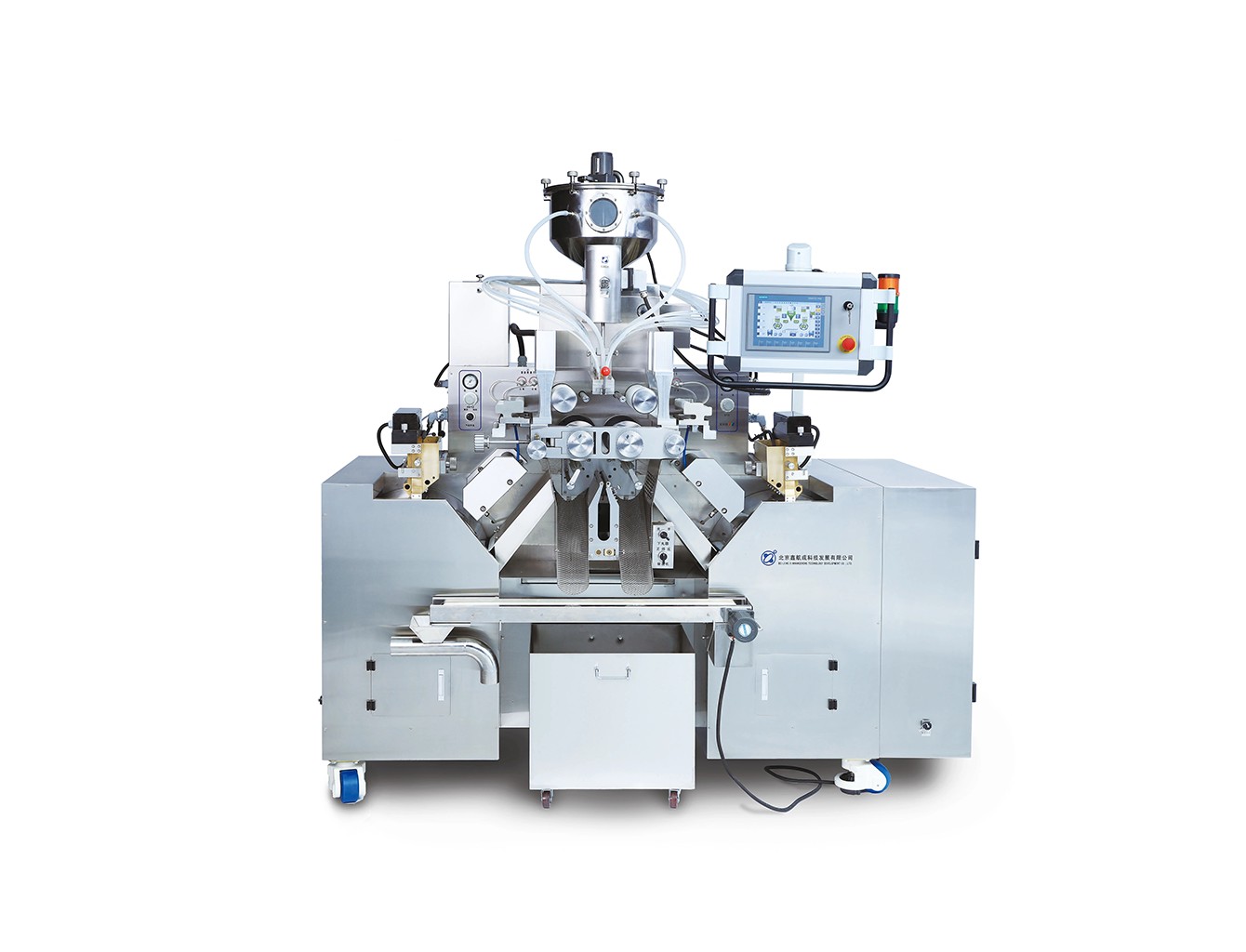
We evaluate output caps carefully. Manual setups limit you strictly. They produce low thousands per hour. Operators need breaks. Shift changes disrupt your flow. You lose an hour of production during every handover. Output fluctuates based on the time of day. You cannot predict exact yields reliably. This unpredictability hurts your supply chain planning.
Automatic units scale massively. Mid-range units hit tens of thousands hourly. Industrial units hit hundreds of thousands hourly. They run continuously over multiple shifts. You achieve true 24/7 manufacturing capabilities. Production efficiency skyrockets when machines run unsupervised. You meet massive purchase orders easily. You never miss delivery deadlines due to fatigue.
Manual pumps rely on physical timing. Operators actuate the filling mechanism. This creates higher risk for volume variance. You see increased gelatin waste. Inconsistent fills mean you give away expensive product. Some capsules receive too much active ingredient. Others receive too little. You cannot afford this in strict regulatory environments. Wasting an expensive API like CBD oil hurts your margins deeply.
Servo-driven injection pumps solve this completely. They provide exact micro-dosing precision. This automation maximizes your API yield. It minimizes gelatin webbing waste. You save money on raw materials. The machine injects exact volumes every single time. Modern systems hit tolerances within one percent. You eliminate the guesswork from dosing.
You strip down a manual unit quickly. Operators clean the components fast. Fewer moving parts make sanitation simple. They fit facilities perfectly if you run multiple distinct formulations daily. You might switch from fish oil to vitamin E before lunch. Manual units support this agile scheduling. You wash the hoppers manually. You reassemble the parts in an hour.
Automatic systems present a different reality. Changeover times take significantly longer. They require structured Clean-in-Place systems. We call this CIP. Alternatively, operators must rigorously tear down the unit. Complex die rollers need careful handling. Distribution plates require meticulous sanitation. You spend more time cleaning. However, you spend less time running the batch. This trade-off suits long production runs perfectly.
Manual operations demand high physical labor density. One operator runs one machine. They remain constantly engaged. They cannot leave their station. You pay for continuous physical exertion. Finding reliable operators becomes difficult. High turnover rates plague manual manufacturing floors.
Automation shifts physical labor to technical oversight. One trained technician monitors multiple machines simultaneously. They walk the floor checking digital readouts. They perform preventive maintenance. You elevate your workforce. You hire analytical thinkers instead of manual laborers. This reduces your overall headcount. It increases your operational stability.
Operational Metric | Manual Setup | Automatic Setup |
|---|---|---|
Average Throughput | 1,000 - 3,000 per hour | 50,000 - 500,000 per hour |
Fill-Weight Tolerance | ± 3% to 5% | ± 1% |
Changeover Speed | Fast (Under 2 hours) | Moderate (4 - 6 hours) |
Labor Density | 1 Operator per machine | 1 Technician per 3-4 machines |
Automatic systems remove operator fatigue. This protects the sealing and sizing process. Human error causes most batch failures. An operator might blink. They might slow their hand speed. The seal breaks. The capsule leaks. Automation removes this physical variable. The machine maintains constant pressure. It applies exact heat continually. You get perfectly sealed capsules every time.
Enclosed material feeding systems limit environmental exposure. Open-hopper manual processes expose materials to the air. Airborne contaminants threaten your product purity. Moisture affects the gelatin shell integrity. Automated systems use closed transfer lines. The medicine pumps directly from sealed tanks. You reduce cross-contamination risks significantly. This protects your brand reputation.
Modern machines integrate PLC and HMI systems. They log vital batch parameters automatically. The system records temperature, speed, and pressure continuously. This supports GMP guidelines perfectly. It also ensures FDA Part 11 compliance. Auditors love electronic records. They want to see verifiable data trails. Unlogged manual runs cannot offer this critical advantage. You must rely on paper batch records. Operators might forget to log a timestamp. Digital systems never forget. You secure your facility against compliance failures.
Maintenance Task | Manual Requirement | Automatic Requirement |
|---|---|---|
Die Roller Alignment | Continuous visual check | Once during batch setup |
Lubrication Adjustment | Manual top-up | Automated continuous flow |
Wedge Temperature Check | Every 30 minutes | Continuous digital monitoring |
We evaluate the capital expenditure against operational expenses. High initial hardware investments scare many buyers. You must look past the sticker price. Compare it against long-term wage savings. You hire fewer operators. You reduce material waste significantly. The machine uses less gelatin per capsule. It wastes less active ingredient. These daily savings compound quickly over a year.
Calculate the hidden costs carefully. Manual variance causes rejected batches. These rejected batches hurt your profit margins. Under-filled capsules cause expensive product recalls. Failed quality audits shut down production lines. You lose revenue during these shutdowns. Automation prevents these costly scenarios. Consistency protects your bottom line. It ensures predictable profit margins.
Upgrading requires concurrent facility investments. You cannot just buy the encapsulator. You must install industrial chillers. You need automated tumble dryers. Strict HVAC controls become mandatory. Softgel gelatin requires precise ambient humidity. You need tight temperature regulation in the room. Buyers must factor these into the total upgrade budget. We see many companies under-budget their facility upgrades. They buy the main unit but fail to upgrade their HVAC. The machine struggles to produce quality capsules in high humidity. Transparency matters here. Plan your full infrastructure upgrade simultaneously.
Evaluating your current production stage ensures you buy the right equipment. You must match your hardware to your daily reality.
When to Stick with Manual (or Semi-Automatic):
R&D labs testing early-stage formulations.
University testing environments exploring new applications.
Operations requiring three or more formulation changeovers per shift.
Facilities facing limited floor space constraints.
Buildings running older, un-upgraded HVAC systems.
When to Upgrade to Fully Automatic:
Dedicated commercial manufacturing of standard SKUs like Omega-3 or CBD oils.
When labor costs to scale manual output exceed the monthly financing of automated equipment.
When strict regulatory markets demand auditable, repeatable batch consistency.
Choosing between a manual capsule machine and an automatic system dictates your operational model. It defines your labor structure. It sets your ceiling for scale. It is not just a hardware choice. You shape the future capabilities of your entire manufacturing floor. Manual flexibility serves early-stage growth well. However, automated precision wins commercial-scale contracts.
We advise decision-makers to conduct a thorough throughput audit. Request a customized ROI calculation. Base this on your specific gelatin and fill-material viscosity. Do this before procuring equipment. You will secure your production future safely and profitably.
A: Yes. Semi-automatic hybrid options combine automated filling and manual transfer. They serve as a transitional step. Medium-scale operations benefit from this middle ground. It reduces operator fatigue while controlling your initial upgrade costs. You gain precision without buying a fully automated line.
A: The learning curve requires patience. Staff transition from mechanical labor to digital PLC operation. Vendors typically supply one to two weeks of intensive training. Technicians must learn precise calibration, timing synchronization, and basic troubleshooting. This ensures smooth, continuous production runs.
A: Absolutely. Automatic systems utilize advanced heated hoppers. They feature pressurized injection systems. These components handle heavy suspensions consistently. Gravity-fed manual setups struggle to push thick liquids accurately. They lead to higher fill variance and potential blockages.


